
AI in F1 Marketing: 5 Simple Rules for Brands & Partners
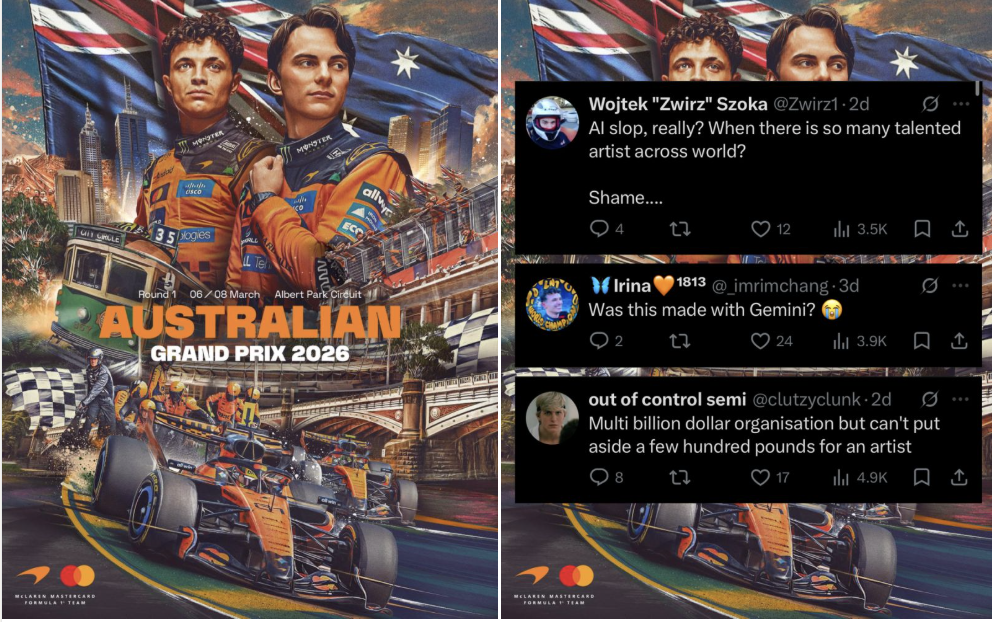
During the first week of the 2026 F1 season, McLaren Mastercard F1 Team published its Australian Grand Prix poster and F1 fans immediately started calling it out for using AI.
Except it hadn't…
The artwork had been created by (a real human) artist, Neil Jamieson.
Source: LinkedIn/ John Barrett
But the reaction was almost more interesting than the poster itself, because it tells you something F1 partners and brands need to consider before they start using AI in Formula 1 marketing: a lot of fans really won’t accept AI being used in your marketing content.
Why AI is Tempting for F1 Partners
AI in Formula 1 marketing can potentially give brands and agencies a way around some of the restrictions that make creating content in the sport difficult.
Driver and car access is limited and dependent on the rights of your sponsorship agreement, shoots can be expensive, and partners often have access to the same bank of team photography and footage as every other partner.
AI opens up the possibility of creating things that would otherwise be difficult, expensive or even impossible to capture in real life.
But we’ve seen plenty of examples of F1 fans pushing back when AI is used in partner as well as team marketing- from captions to creative to video edits. Partners need to be discerning about where AI genuinely adds something and where it simply shouldn’t be used.
Best Practice: When is it OK for F1 Partners to use AI?
Looking at how AI has already been used in F1 marketing and partnership activation, there are some clear lessons for partners on where it can genuinely add something for fans and where you’re going to get torn apart in the comments for making AI slop. Here are the key principles:
1. Don't use AI to Replace Human Creative
We've already seen how quickly fans react when generative AI is used in place of traditional creative. McLaren faced criticism for its Moon Dog Grand Prix imagery, fans pushed back against the São Paulo Grand Prix's AI-generated driver content and Sky Italia's AI-generated US Grand Prix artwork received a similar response.
A lot of that backlash comes down to what the AI creation is replacing. F1 has an enormous creative industry around it: photographers, illustrators, designers, filmmakers and artists whose work gives teams, partners and races their own visual identity.
When a brand or team uses generative AI to create something those people would traditionally have made, fans can see it as taking work away from human creative talent, particularly when the result doesn't offer anything they couldn't have created themselves.
2. Make It Worth the Audience's Time
Standard Chartered's latest F1 campaign created by agency LEO Singapore used AI to tackle a very real problem for F1 partners: limited access to cars, circuits and the perspectives needed to create distinctive content.
The agency talks about AI opening up “new creative possibilities” and allowing them to create perspectives that couldn't have been captured through a traditional shoot.
But looking at the finished asset, I'm struggling to see where those new possibilities actually show up for the audience. It's still an F1 car on a circuit, dramatic track shots, a voiceover and a bland brand message.
The production process might be new. The creative idea doesn't feel new.
It’s true, partners are often working with a limited bank of approved F1 imagery and footage, which naturally restricts what they can create. AI potentially removes those production restrictions.
But Standard Chartered and its agency has used that freedom to create something that looks exactly the the to what every other F1 partner is already doing- look at the majority of partner launch posts- here, here and here . It’s track content, mixed with a bit of partner BTS and the same messaging, probably about shared values (yes teams and partners are short on time, resource and assets, need to tick off a contractual deliverable, but I think there is so much more creativity available).
(If you're looking for a more creative way to announce an F1 partnership, take a look at some of these F1 partnership launch examples.)
Here, the production method is different, but creatively, we've ended up in the same place.
That's the missed opportunity for me. If AI gives you access to environments, perspectives and imagery you couldn't otherwise create, use that freedom to give the audience something they haven't already seen a hundred times.
3. Make Something Possible, not to Replace the Experience
Source: Shell Motorsport
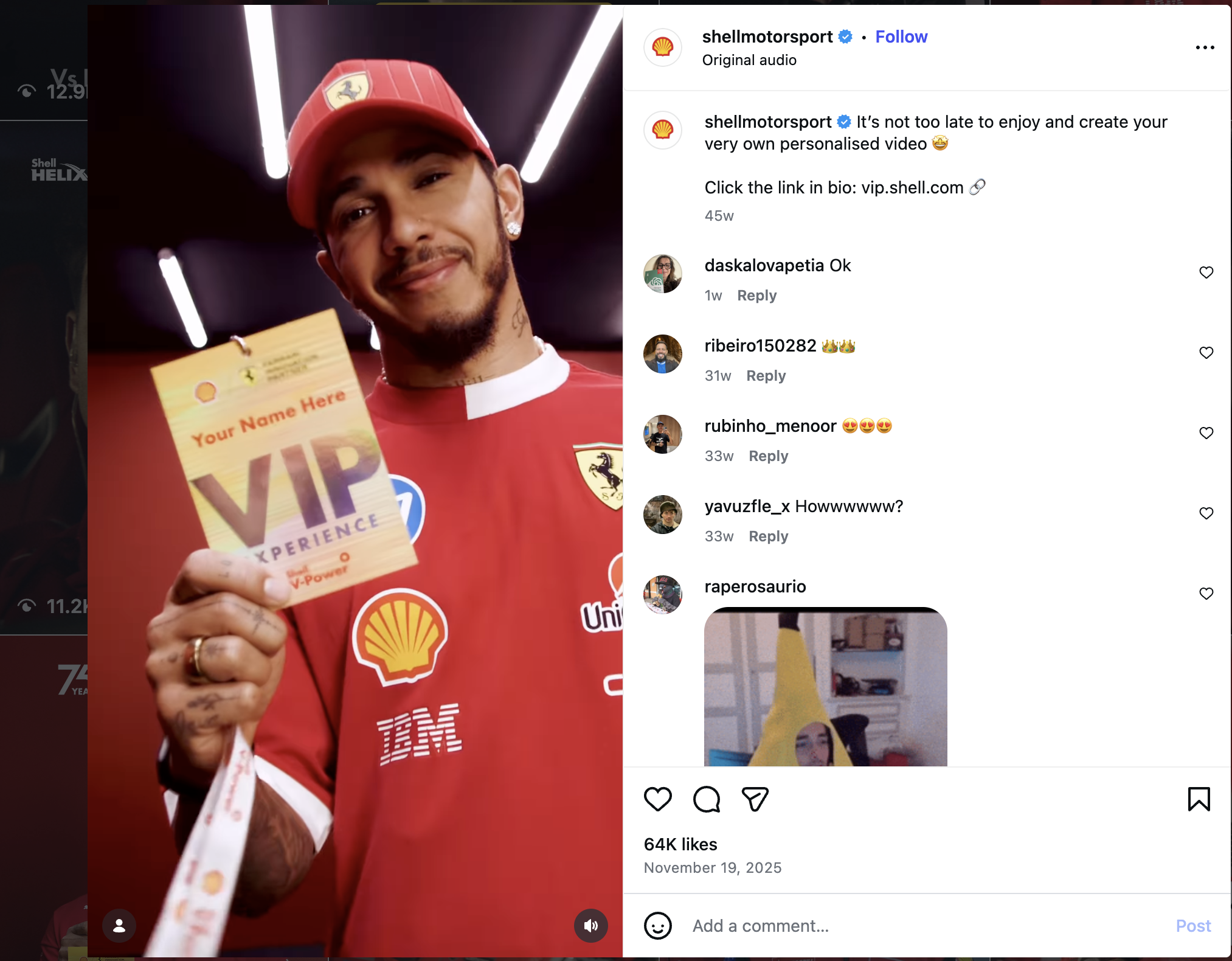
Shell V-Power’s Feel Closer campaign with Scuderia Ferrari is a better example. Fans could create a personalised film that put them inside the Ferrari pit garage, with Lewis and Charles welcoming them by name and personalised details appearing throughout the experience. The drivers were actually filmed for the campaign, with AI then used to create the personalisation at scale.
This feels like a much clearer reason to use AI. You couldn't realistically ask two F1 drivers to film hundreds of thousands of individual videos, and it gave fans personalised access to a part of F1 that most will never experience themselves. AI was used to make the experience possible, not replace the experience.
It also doesn't feel particularly intrusive from a fan perspective. The drivers are real, the environment is recognisably Ferrari, and the technology sits behind an experience designed to bring fans closer to the team rather than replacing an artist or designer with something AI-generated.
And it worked for Shell. The campaign generated more than 672,000 personalised videos and leads, 2.2 million video-player visits and a reported 4% increase in Shell V-Power B2C volume during the campaign.
That's a much stronger use of AI in F1 fan engagement: it enabled something the brand couldn't realistically have delivered without it and gave fans something genuinely interesting in return.
4. Give Fans new Possibilities
Source: Lenovo
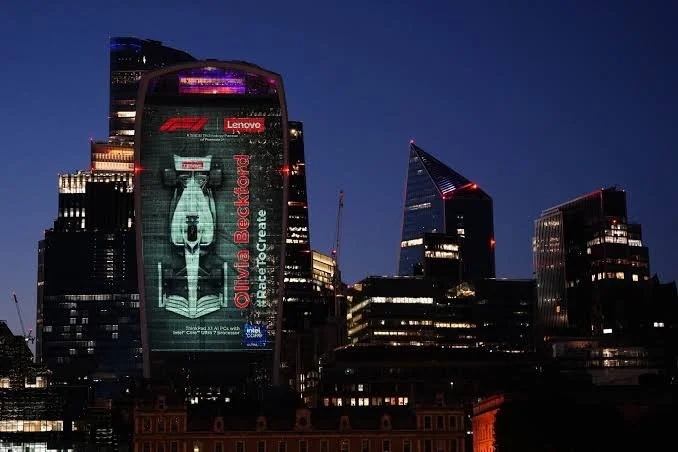
Lenovo’s Race to Create activation with Formula 1 is an example of AI being used to help fans create something themselves. Fans could design their own F1 liveries using AI, with the designs then turned into shareable racing content and selected designs displayed publicly on London’s Walkie-Talkie building.
Most fans don’t have the design skills or tools to create a convincing F1 livery themselves. Here, AI gave them a way to participate creatively rather than simply replacing the person who would normally create the work.
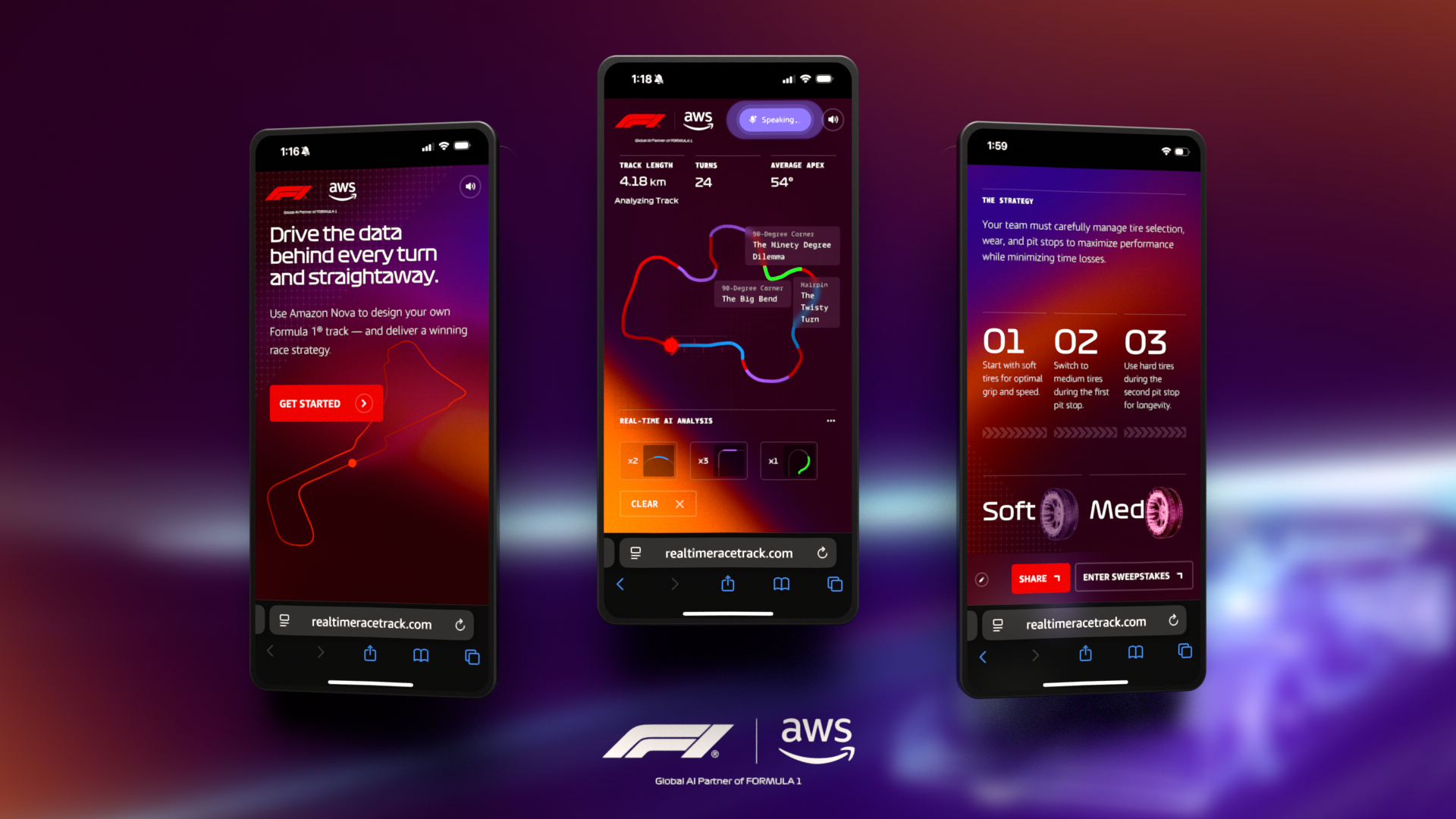
AWS took a similar approach with Amazon Nova, allowing fans to use generative AI to design their own F1 circuit, with the technology helping them develop the track. It works because it also makes sense for the sponsor: AWS is giving fans something fun to create while demonstrating what its own AI technology can do.
In both cases, AI isn't doing the creative work instead of the fan. It's giving the fan the tools to create something they probably couldn't have made on their own.
Source: Formula 1
5. Enhance the IRL Experience
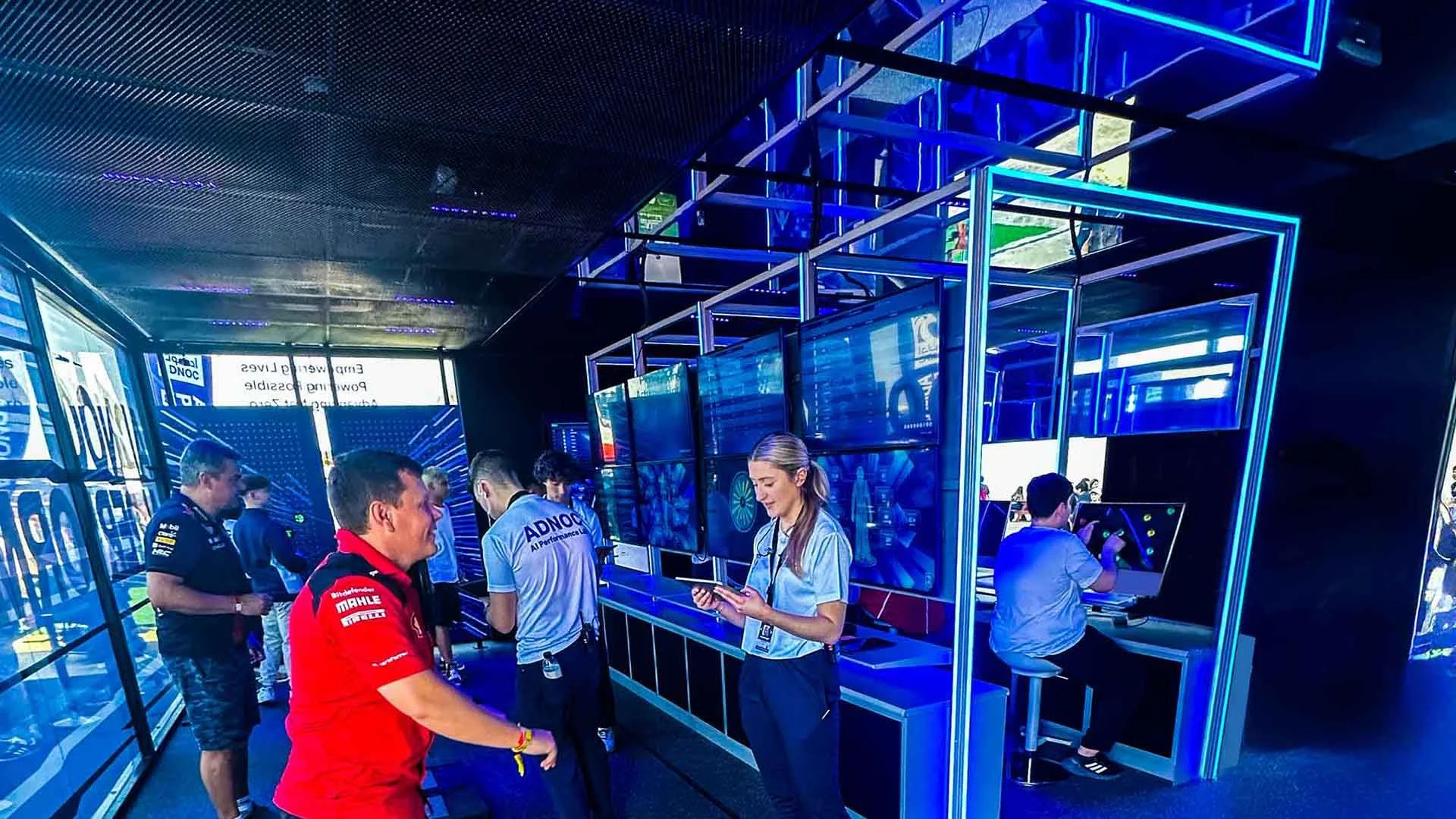
ADNOC's AI Performance Lab at the Abu Dhabi Grand Prix used AI to let fans test their own performance and compare themselves with an F1 driver.
You're obviously never going to get the chance to race an F1 car yourself, but technology can give fans a fun way to understand how their own performance compares. Here, AI isn't replacing any part of the real F1 experience, it's adding another layer to it and giving the fan something they couldn't otherwise do.
For me, that's where AI starts to feel genuinely useful in an activation: when the technology serves the fan experience, rather than becoming the experience for the sake of it.
Want to see more examples of best-practice F1 experiential marketing? Read our guide to creating better F1 brand activations
AI Should Serve the Idea, Not Become the Idea
When it comes to using AI in F1 marketing, the best practice is fairly simple.
Don't use AI to replace human creativity
Make sure it's adding something for the audience, whether that's access, personalisation, participation or an experience they couldn't otherwise have.
And if AI removes the usual restrictions around what you can create, use that freedom to do something genuinely different.
Most importantly, start with the audience and the idea, not the technology. If you can't clearly explain what AI is adding, you probably don't need it.
It also makes a good case for giving proper visibility to the creatives you work with. If you've commissioned an illustrator, photographer or designer, tell people who they are or tag them.
As well as avoiding confusion around AI, it gives the collaboration more meaning and allows the brand to benefit from the creative world and audience that person brings with them. (Read more about leveraging cultural capital in F1 marketing.
If you're an F1 partner looking for advice on how to get more from your partnership rights, that's what we do at Outlap. Get in touch to talk about F1 partnership strategy, activation and content.