
How do you create an F1 experience when your brand isn't naturally exciting?
Some Formula 1 partners have an obvious advantage when it comes to experiential marketing.
LEGO can let drivers race life-sized F1 car out of bricks. KitKat can create a chocolate race car. PUMA can do a fashion show. ELEMIS can turn its partnership into treatments and wellness experiences. Barilla can host a dinner. Heineken can build hospitality and entertainment around a product people already know and consume.
The product already gives people something to see, taste, try or participate in.
But what if you're a B2B technology company, financial services business or science-led brand? Creating a compelling in-person experience becomes much harder.
Your product might be intangible, technical, regulated or largely invisible to the average F1 fan. Few people are going to give up their Saturday during Miami Grand Prix week because they really want to experience some enterprise software.
That doesn't mean the partnership can't create something people actively want to attend. It just means the product probably isn't the attraction.
Stop starting with the obvious F1 stuff
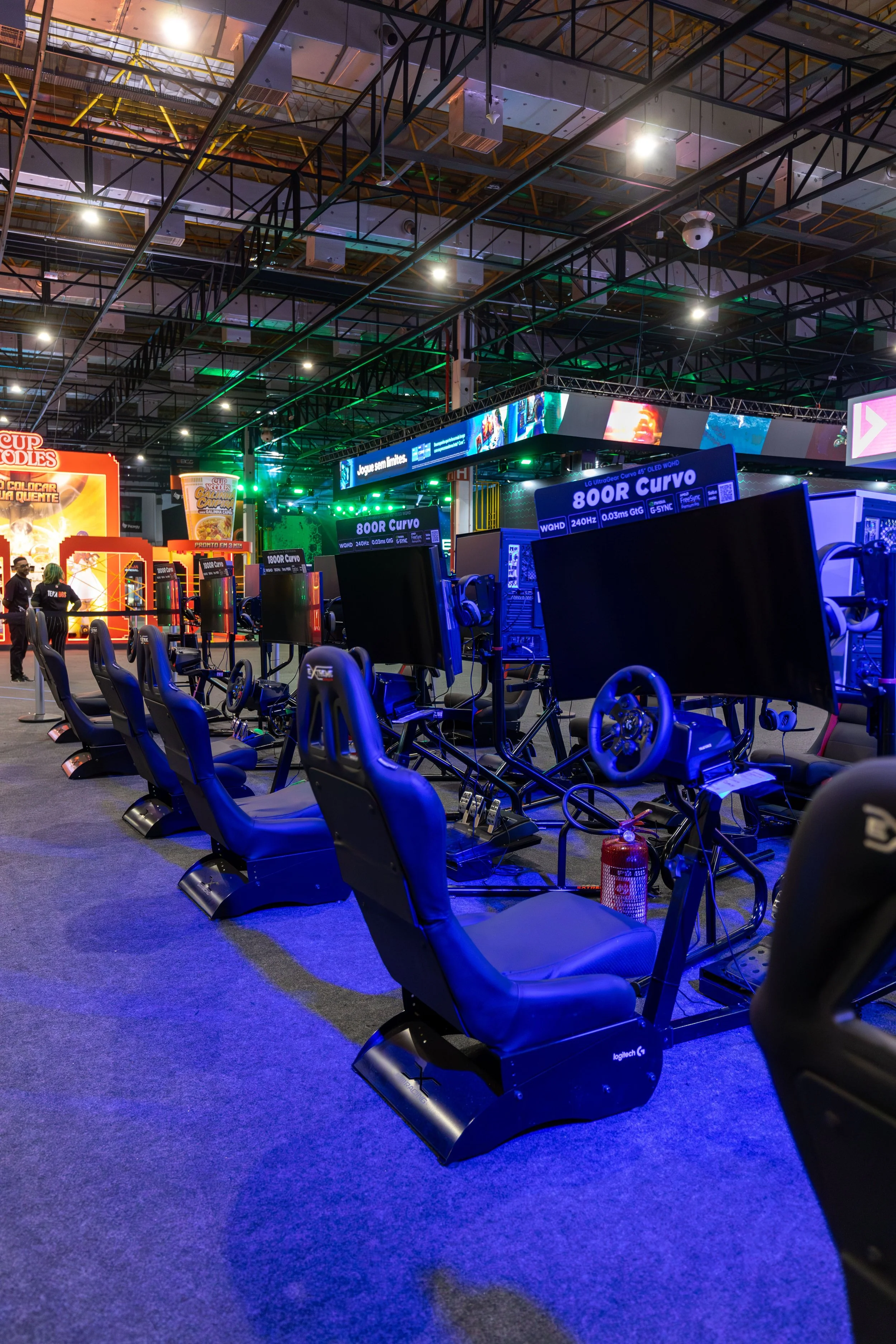
When there isn't an obvious consumer experience, it's easy to fall back on the standard F1 activation toolkit: simulator, reaction test, show car, branded merchandise, pit-stop challenge.
There's nothing inherently wrong with any of these. Fans understand them and they'll usually participate. The problem is that the same experience could belong to almost any partner on the grid. It isn't particularly novel, and it doesn't do much to help a brand stand out in an increasingly competitive partnership space.
If you're trying to change perceptions of a company, reach a new audience or build genuine affinity, the better question is:
What can this brand give people through its F1 partnership that they couldn't otherwise experience?
A simple framework
For brands without an obvious consumer experience, I think there are four useful ingredients:
Brand platform + F1 access + cultural capital + local relevance
The brand platform is the big strategic idea or territory that connects the brand to Formula 1. It answers the question: what is the meaningful connection between this brand and this sport?
That idea then becomes the thread running through the partnership. Individual campaigns, activations, experiences, content and communications can all look different, but they should ladder back to the same territory. Sometimes that platform has a public-facing name; sometimes it simply exists as the strategic thinking behind the partnership.
The point isn't simply to find something the brand and F1 both have in common. Innovation, performance and excellence could describe almost every partnership on the grid. The territory needs to be specific enough to give the partnership a point of view and useful enough to guide what the brand actually does with its rights.
F1 access is what the partnership gives you that most people can't normally access: drivers, team talent, cars, engineering expertise, environments, content and behind-the-scenes experiences.
Cultural capital comes from connecting with people, places and communities the audience already cares about.
And local relevance makes the experience feel like it belongs in Miami, Melbourne or Singapore rather than being the same travelling activation dropped into another city.
The interesting part is what happens when those four things intersect.
Borrow cultural capital
For brands that aren't naturally experiential, my starting point is usually this: don't try to force the product to become the attraction. Borrow cultural capital from something that already has it.
That could be a local artist with a significant following, a chef people will queue to experience, a musician, another athlete or sports team, a running community, an artist, a community label or even another property in the brand's sponsorship portfolio.
The opportunity is to create something together.
Done well, that collaboration brings more than a recognisable name to the activation. It brings another audience, community and source of credibility into the partnership. A local artist can introduce the brand to their followers. A chef can give people a genuine reason to visit a space. A collaboration with another sports team can connect two fanbases that wouldn't normally overlap.
Formula 1 then adds something those collaborators don't normally have access to: drivers, engineers, cars, team environments, data, technology, heritage and the wider excitement surrounding a Grand Prix.
This is where I think some of the most interesting experiential ideas sit: brand platform + F1 access + borrowed cultural capital + local relevance = something people want to attend.
The brand platform gives the collaboration a reason to exist. F1 provides the access and scarcity. The collaborator brings cultural equity and an existing audience. Local relevance makes the idea feel like it belongs in that particular city.
Crucially, this isn't about attaching a fashionable collaborator to a sponsorship and hoping some relevance rubs off. The interesting part is what the two sides can create together that neither could credibly create alone.
We've already seen some of F1's less obviously experiential categories take versions of this approach.
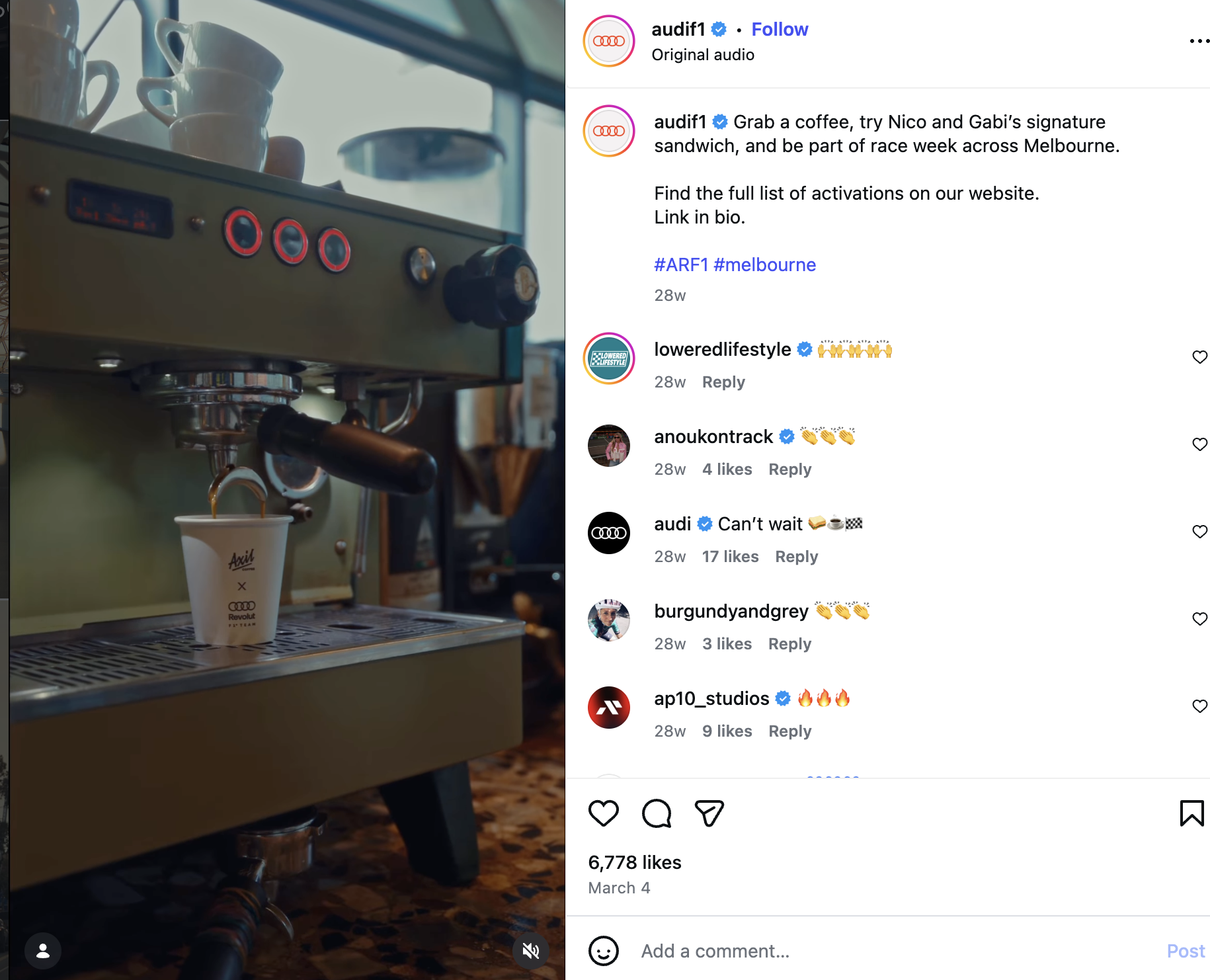
Revolut × Audi F1 - Melbourne's food, coffee and social scene
Source: Audi F1 Team Instagram
Financial services isn't an obvious starting point for experiential. For Audi Revolut F1 Team's debut in Melbourne, the partnership extended across food, coffee, running, music and hospitality, including a takeover of AFLOAT on the Yarra and collaborations with local businesses.
Rather than trying to make fintech the attraction, Revolut tapped into parts of Melbourne's culture people already wanted to experience.
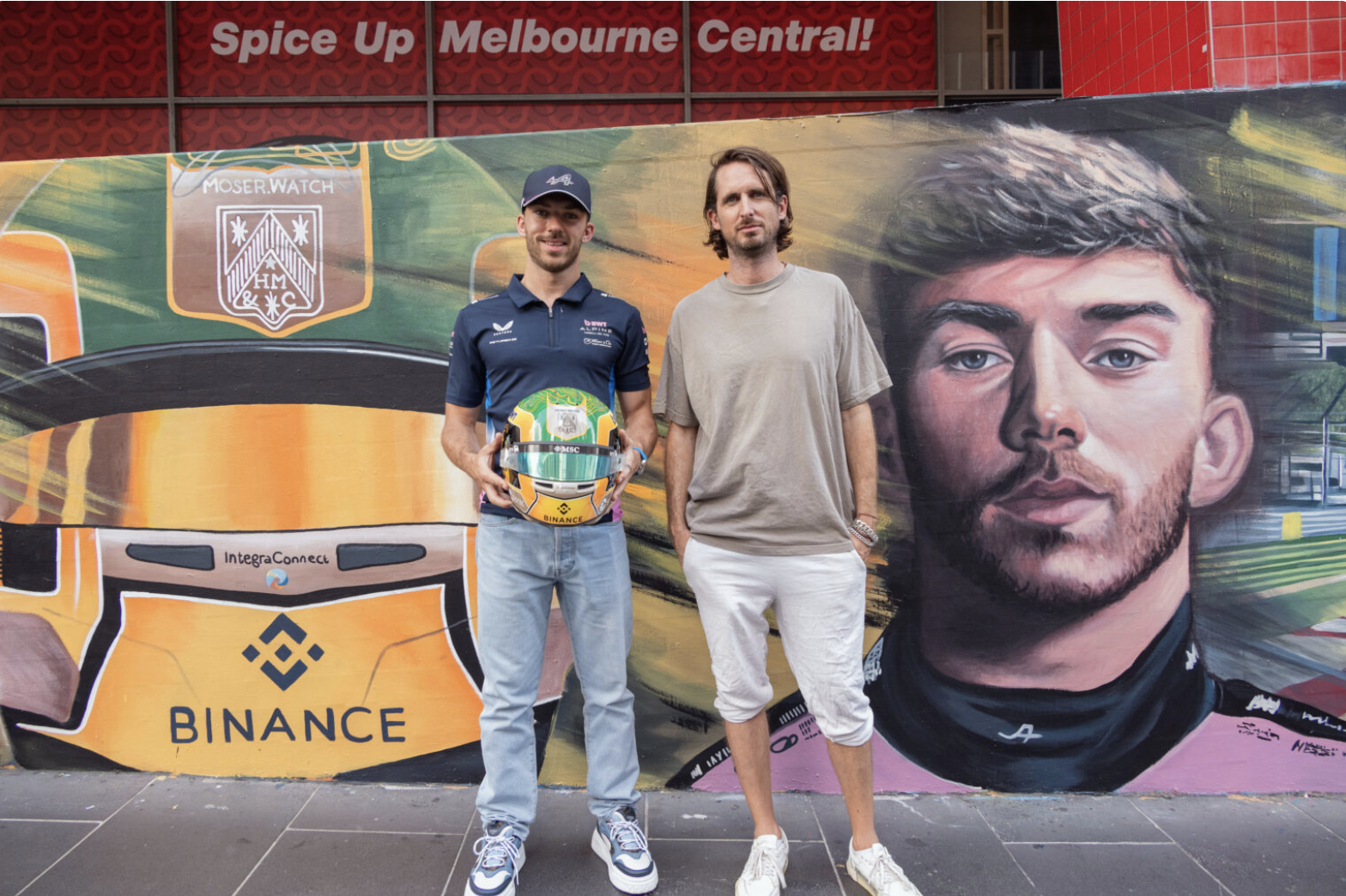
Binance × Pierre Gasly - Melbourne street art
Source: Binance
Crypto presents a similar challenge. Binance worked with Australian street artist Matt Adnate to turn Pierre Gasly's fan-designed helmet into a large-scale Melbourne mural and AR experience, with Gasly appearing at the reveal.
The collaboration borrowed cultural capital from Melbourne's street-art scene while using F1 access to make the idea more compelling.
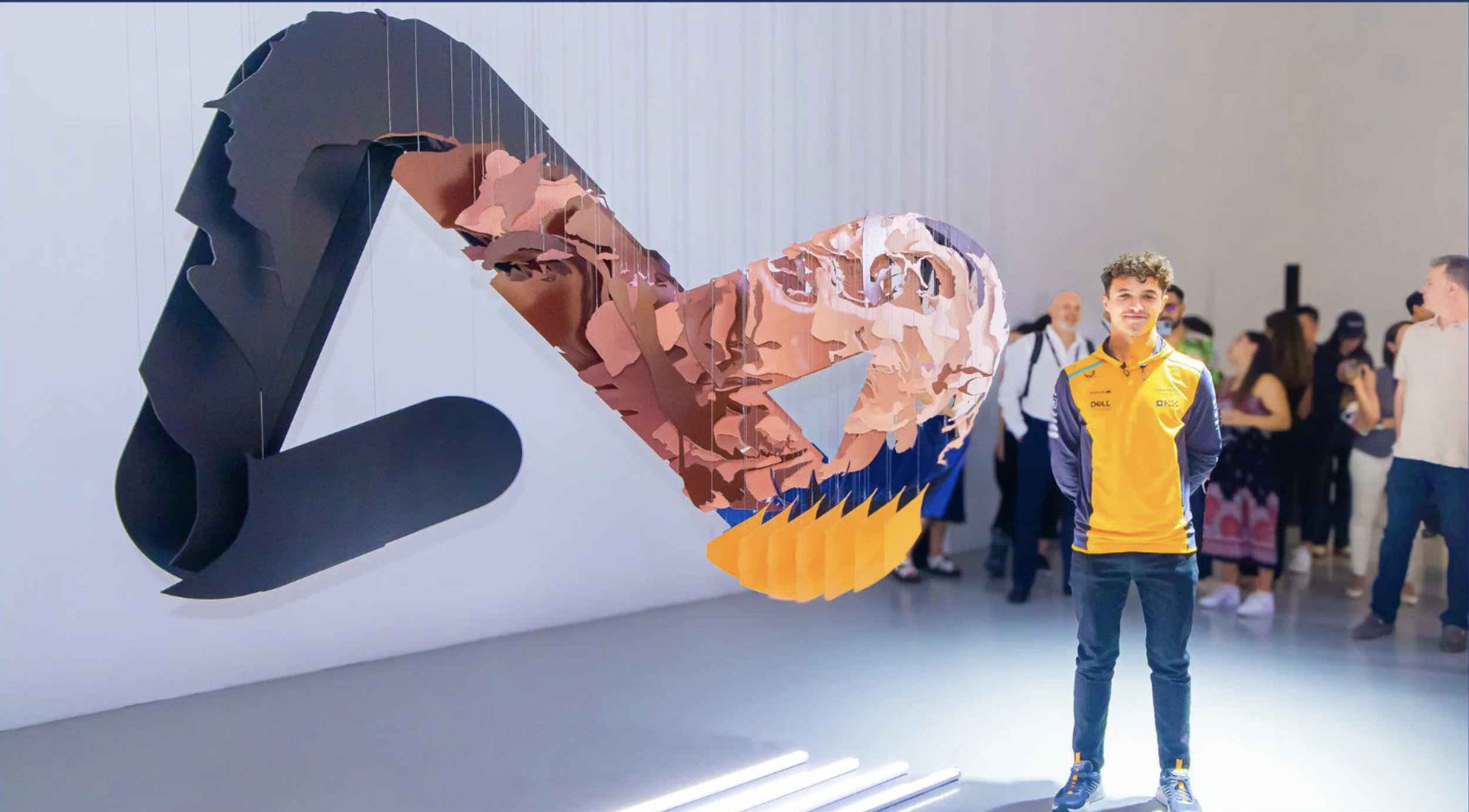
Airwallex × McLaren - contemporary art
source: Marketing Interactive
Airwallex worked with perceptual artist Michael Murphy to turn its Shifted Perspectives partnership platform into a physical artwork.
Rather than trying to make payments or financial infrastructure the attraction, contemporary art provided a way to make an abstract brand idea tangible while connecting back to the wider strategic platform behind the partnership.
Bybit × Oracle Red Bull Racing - the Web3 community
Cultural capital doesn't necessarily have to come from art, music or food.
During Singapore Grand Prix week, Bybit took its Red Bull Racing partnership directly into the Web3 community at TOKEN2049, bringing Max Verstappen and Sergio Pérez into an environment its audience already cared about.
Rather than trying to attract that audience to a separate F1 activation, Bybit used access to the team to make its presence within an existing community significantly more valuable.
HP × Ferrari - Miami's creative scene
Source: HP
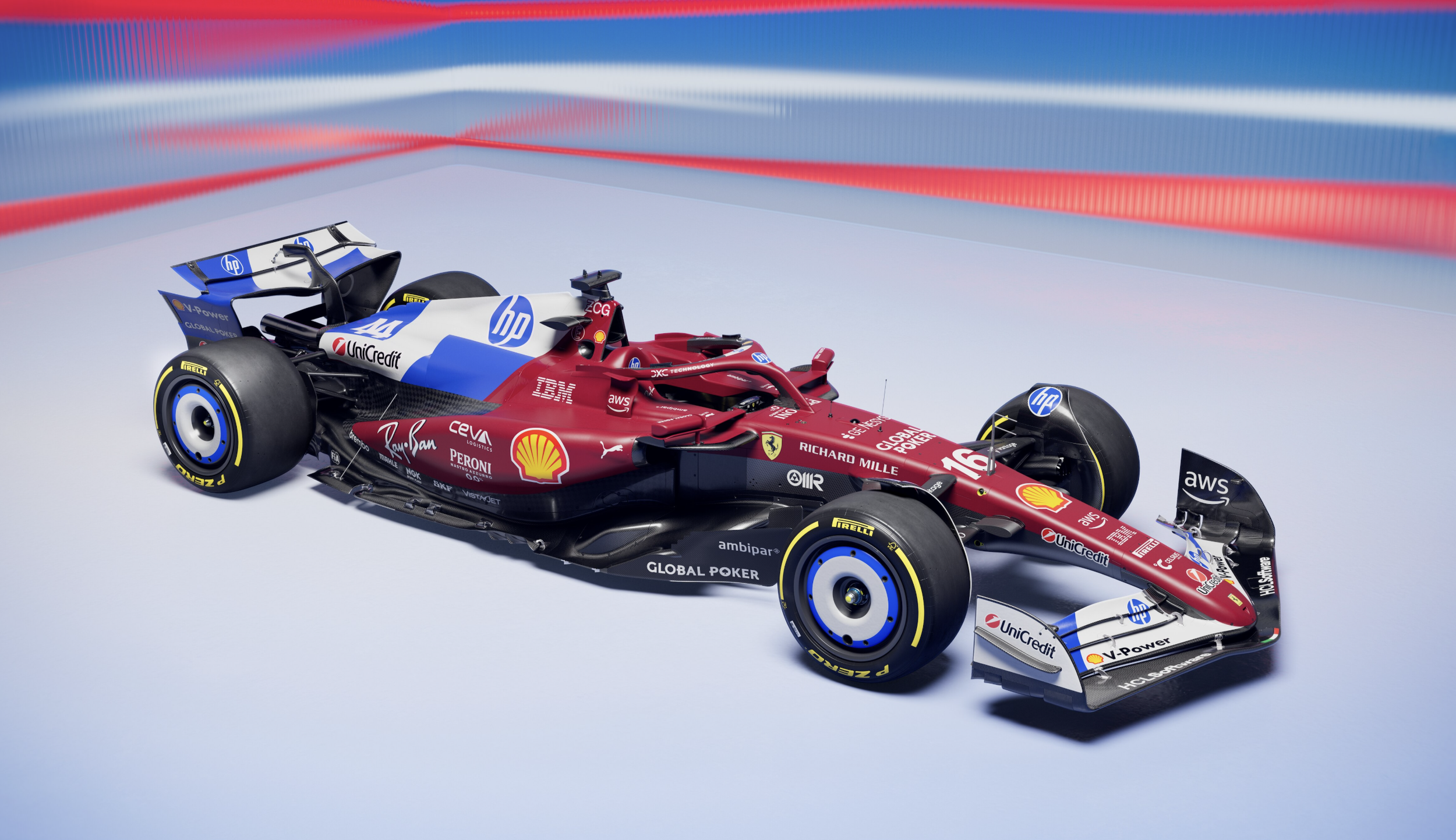
Enterprise technology isn't an obvious starting point for a race-week experience. For the 2025 Miami Grand Prix, HP and Ferrari unveiled a special one-off livery incorporating HP's signature blue, with the launch taking place at the HP Experience in Wynwood Marketplace.
Fans could see the new livery while exploring how HP technology supports Scuderia Ferrari. What I find interesting is the choice of location: rather than relying on the technology itself to draw people in, HP used the livery reveal to bring the partnership into Wynwood, one of Miami's established creative districts.
Kraken × Williams — art, social culture and F1 fandom
Source: Atlassian Williams F1 Team
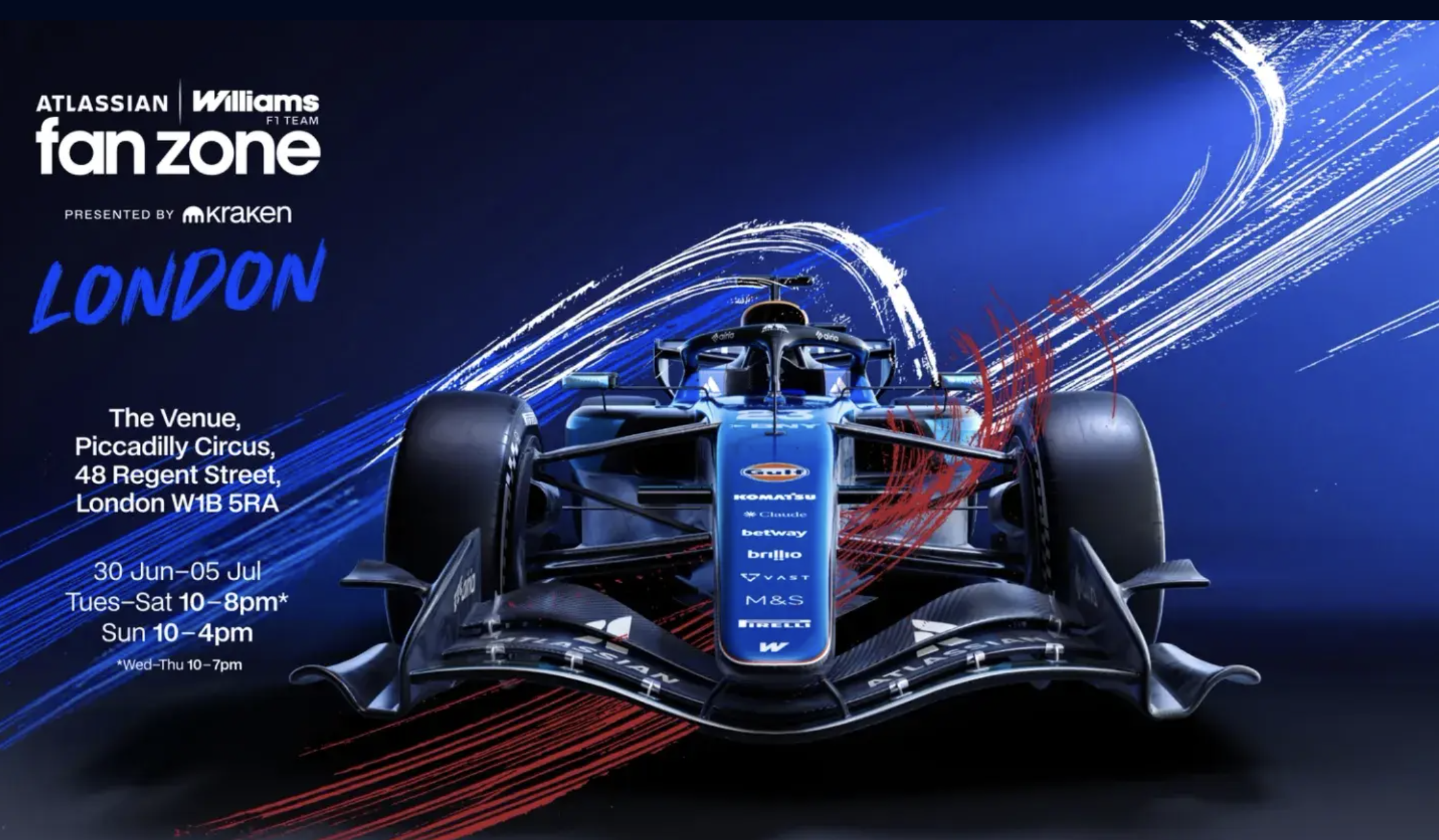
Crypto isn't an obvious reason to visit a physical experience. For the 2026 British Grand Prix, Kraken presented Williams' free-to-enter Fan Zone in Piccadilly Circus, bringing the team into central London for the entirety of race week.
Fans could see the Williams F1 car, meet team figures including Alex Albon and James Vowles, access exclusive merchandise and take part in a programme of partner activations. Kraken had its own interactive element, but the bigger opportunity was its role in enabling access to the Williams world.
Rather than asking people to come and experience cryptocurrency, Kraken attached itself to something they already wanted access to: Formula 1.
Chase × Miami Grand Prix × Peloton - crossing sponsorship properties
Source: Outside (Perspective)
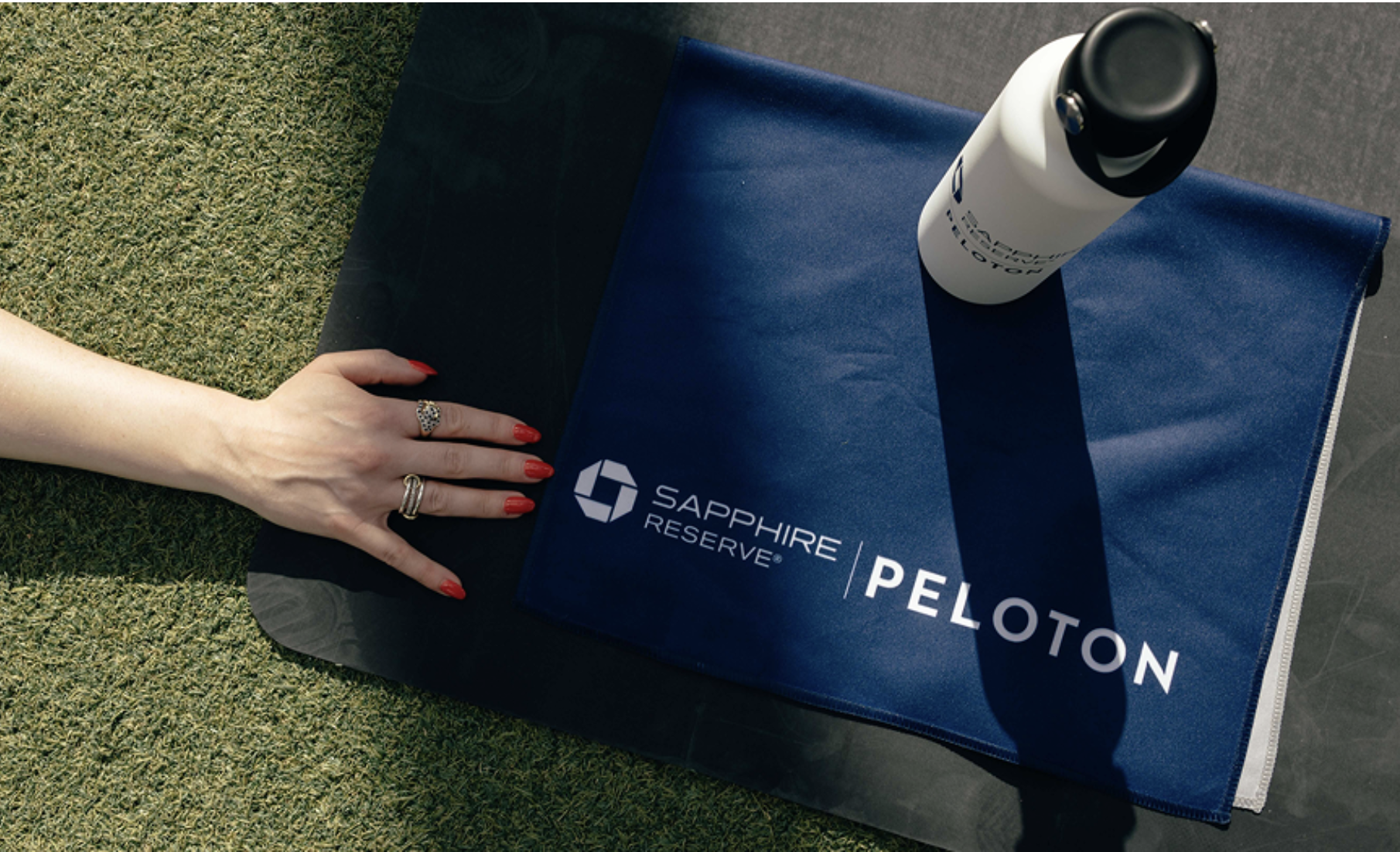
Cultural capital can also come from elsewhere in a brand's sponsorship portfolio. Chase brought its existing relationship with Peloton into its Miami Grand Prix activity, showing how brands can look beyond a single sponsorship when developing an experience.
Away from the circuit, Chase cardholders took part in an exclusive Peloton Mat class at the W South Beach, with motorsport-inspired design and food elements bringing the race-week connection into the experience.
Rather than treating its F1 and Peloton partnerships as separate properties, Chase found a way to bring the two worlds together — using an existing partnership to add another community, experience and cultural entry point to its F1 activity.
F1 teams already borrow cultural capital
You can see the same principle in the way F1 teams and rights holders increasingly market themselves beyond the track. They don't rely solely on motorsport to create relevance; they collaborate with artists, musicians, creators, local businesses and existing communities that bring their own audience, cultural credibility and point of view.
F1 Paddock Club × Pompeii × The Coffee Party - Madrid
Source: F1 Paddock Club Instagram
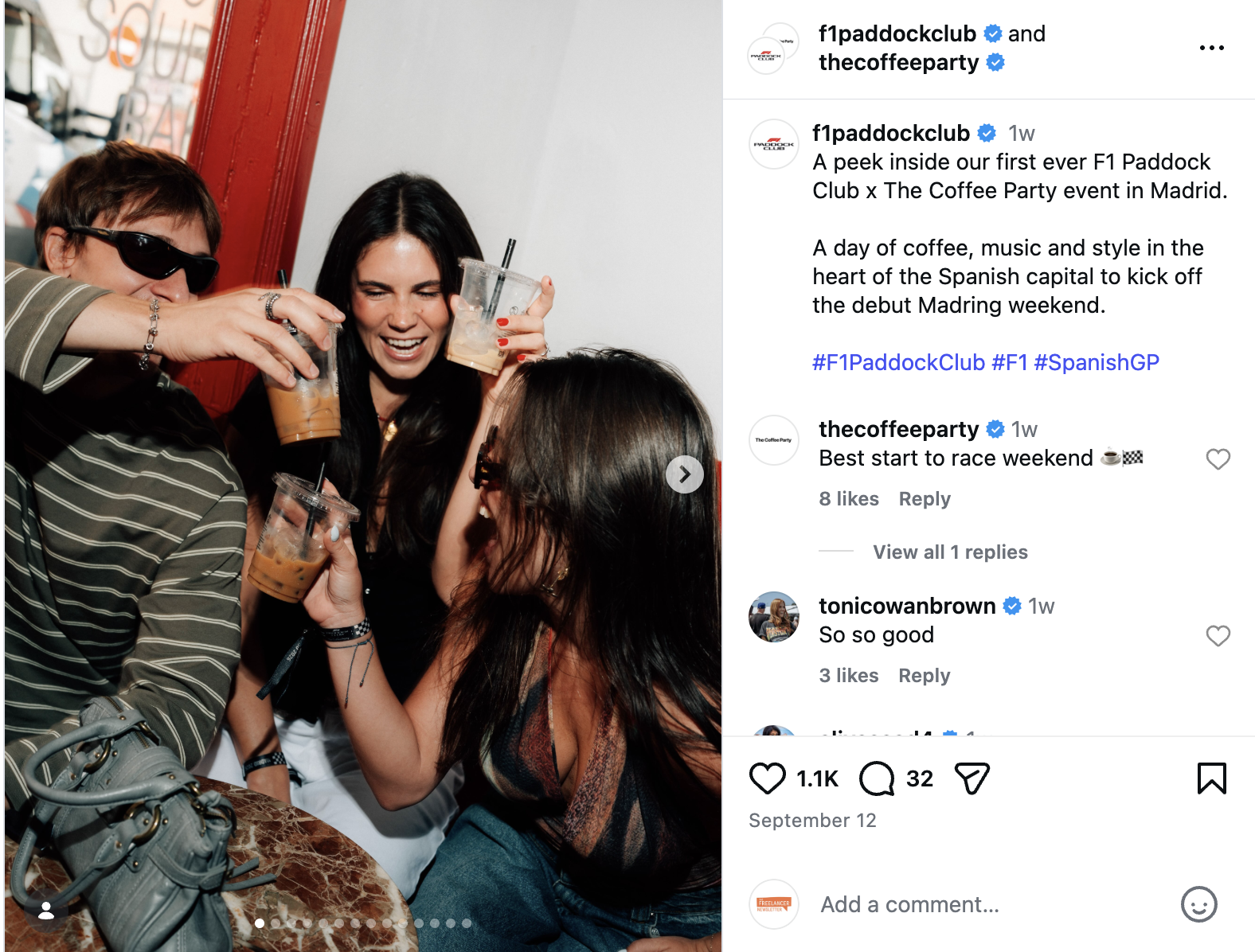
To mark F1's return to Madrid, F1 Paddock Club moved beyond its traditional trackside environment and collaborated with Madrid-based fashion brand Pompeii and The Coffee Party on its first off-track, community-led race-week experience. Rather than trying to recreate Paddock Club hospitality in the city, it tapped into Madrid's existing fashion, coffee and community culture. Pompeii and The Coffee Party brought audiences and cultural relevance that already existed locally; F1 brought the excitement and access surrounding the Grand Prix.
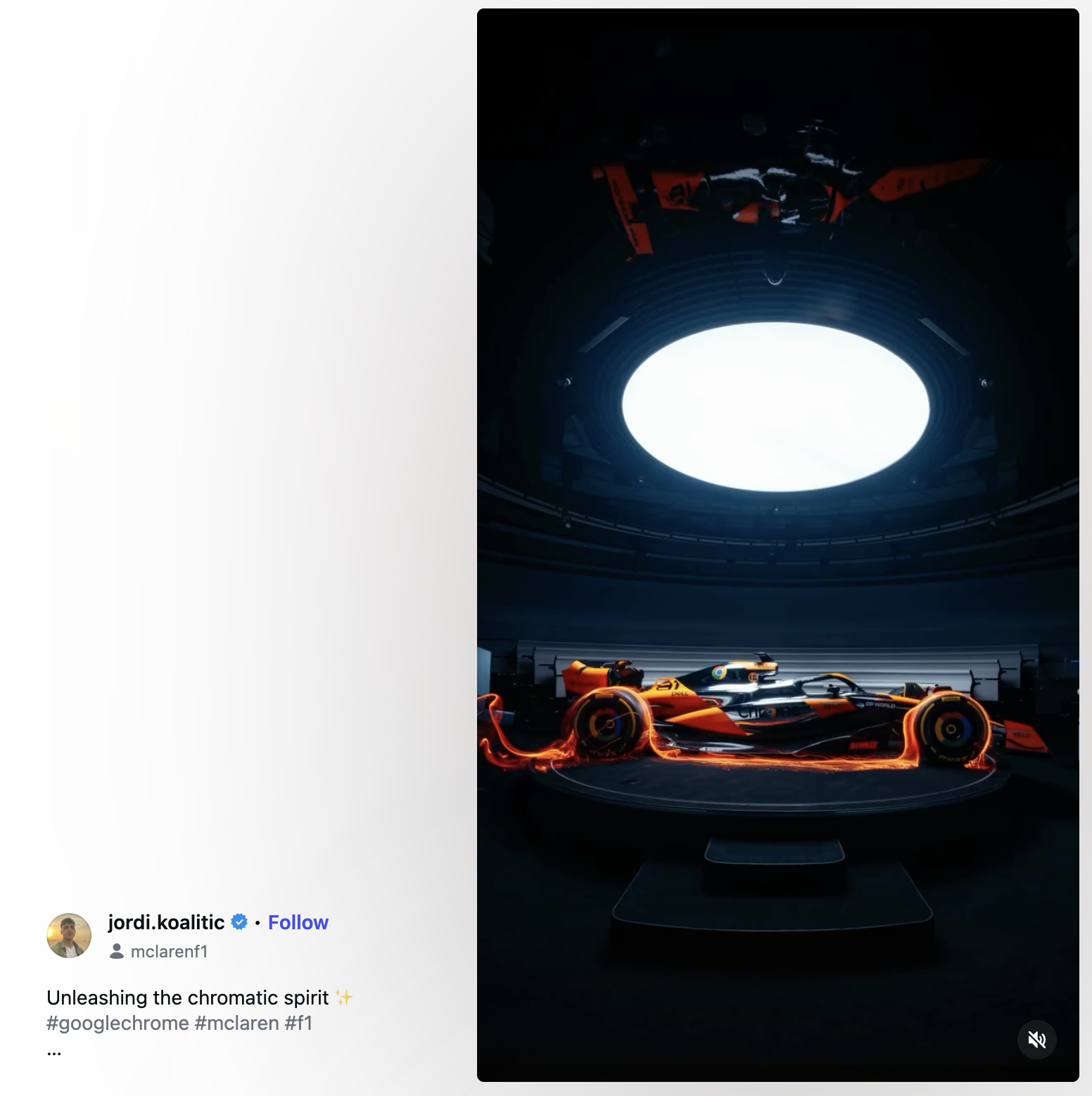
McLaren × Jordi Koalitic - Austin
source: Jordi Koalitic
McLaren worked with Spanish Spanish creative photographerJordi Koalitic for its special Chrome livery in Austin. Rather than relying on a conventional car shoot, Koalitic brought his distinctive long-exposure photography style to the project, using light around the car to create the final imagery.
The collaboration gave the reveal a creative language and audience beyond motorsport, tapping into Koalitic's 7.3 million followers on Instagram followers and established reputation for visual experimentation.
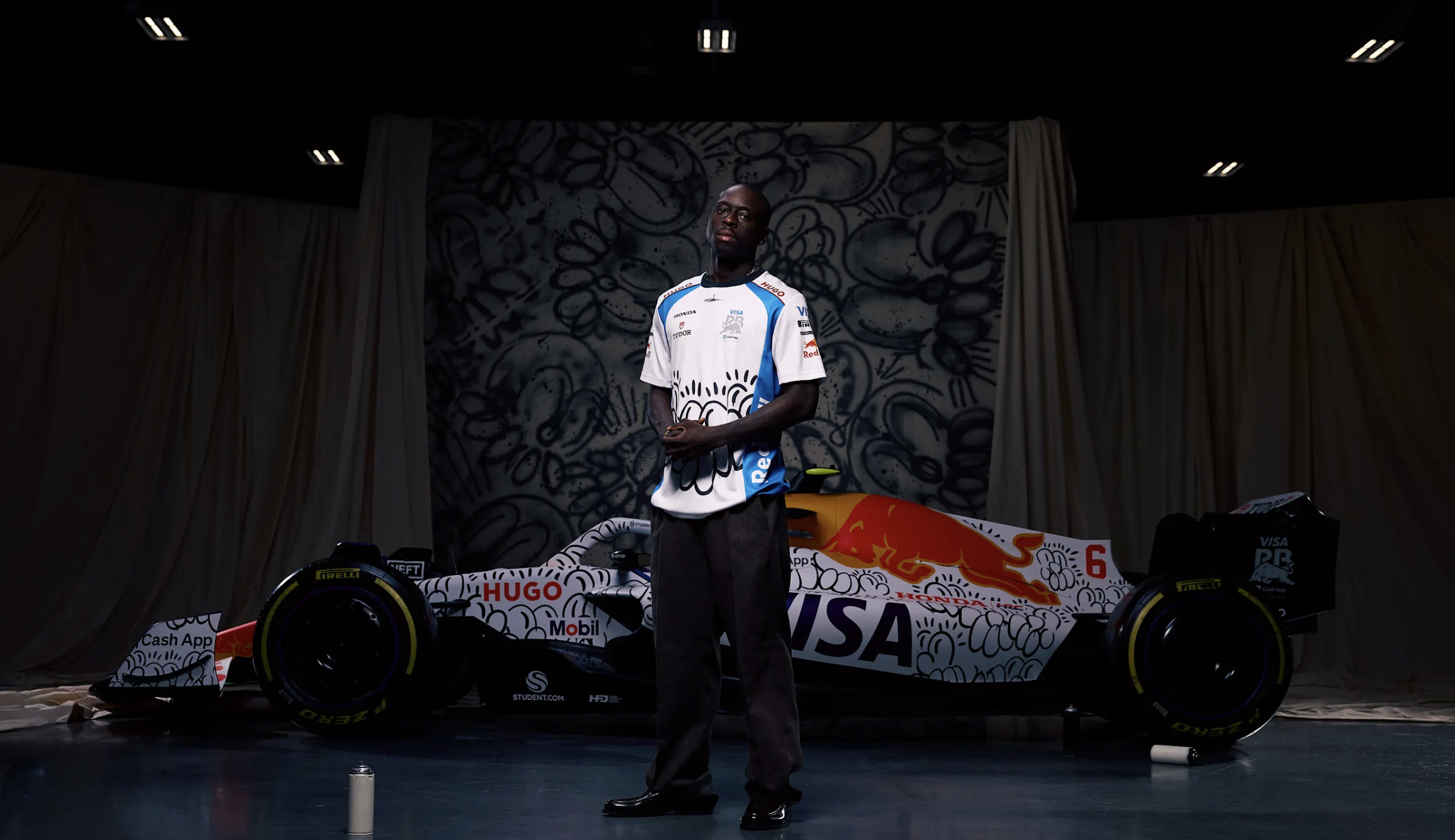
VCARB × Hugo × Slawn - Silverstone
Source: Redbull.com
For the British Grand Prix, VCARB collaborated with London-based artist Slawn, extending his distinctive visual identity across the car, race suits and garage.
Rather than simply commissioning artwork, the team brought Slawn's creative world into its own, connecting F1 with an artist, audience and part of contemporary British culture that wouldn't ordinarily sit within motorsport.
VCARB Wash — Miami
In Miami, VCARB took the idea further into experiential by turning a real Wynwood car wash into a public race-week destination.
Rather than building another conventional F1 fan experience, the team drew on the neighbourhood's car, street-art and creative culture. The car and drivers still provided the F1 access, but the setting and local cultural references gave people another reason to visit and engage with the team.
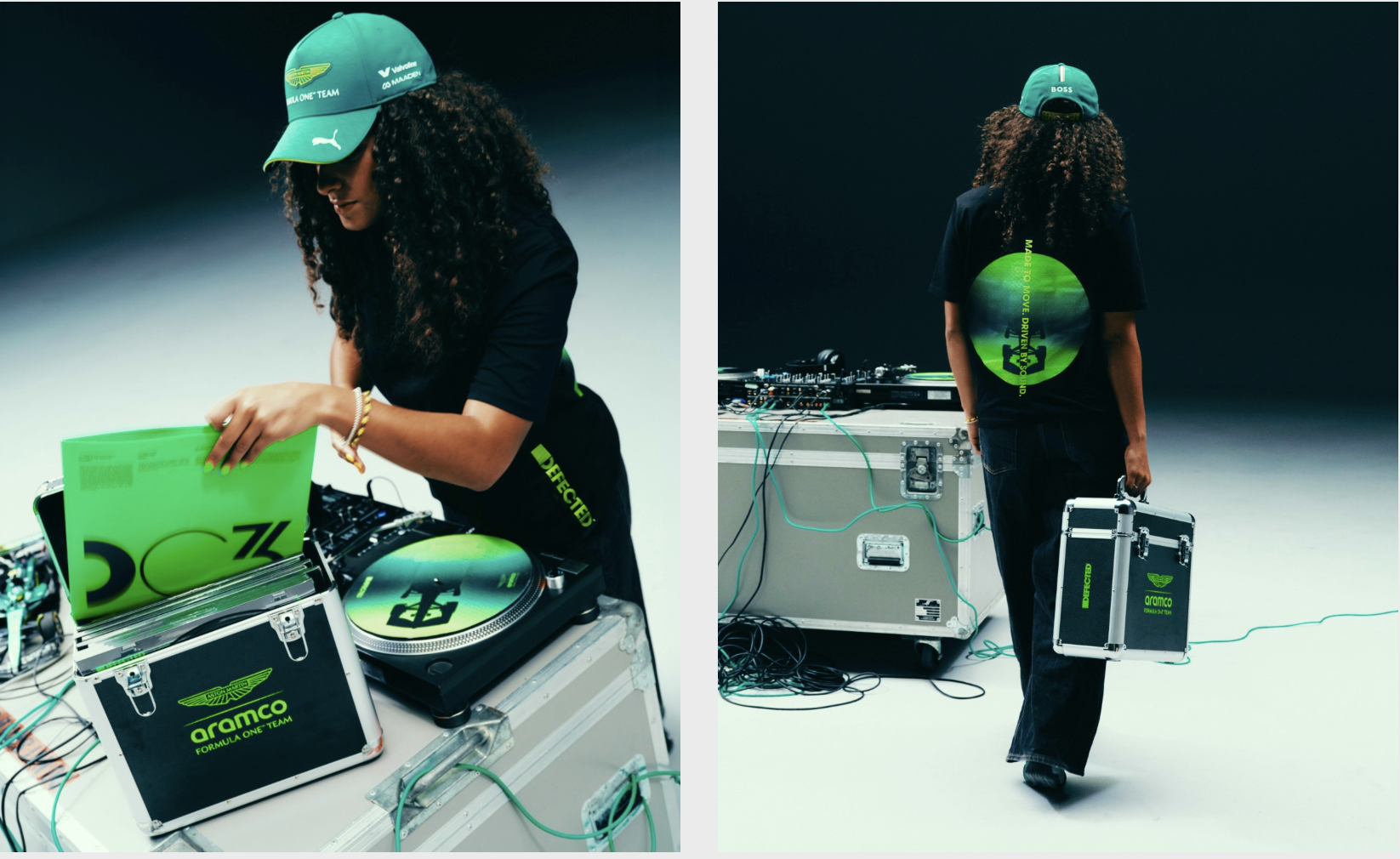
Aston Martin × Defected Records - London
Source: Defected.com
Aston Martin moved into house-music culture through a multi-day Soho takeover with Defected Records, combining DJs, workshops, parties, vinyl and community programming.
Defected brought an established music community, cultural credibility and audience; Aston Martin brought Formula 1 into that world. The result created a point of connection with people who might never have attended a conventional F1 activation.
These are very different executions, but the principle is the same. The team brings something only an F1 team can provide; the collaborator brings cultural equity, creative credibility and an audience the team doesn't necessarily have on its own.
For partners, particularly those in less naturally experiential categories, the opportunity is much the same. If the product itself isn't going to make somebody walk through the door, think about whose world you could credibly enter, what you could create together and what your F1 rights allow you to bring to that collaboration.
Look beyond the F1 partnership itself
Source: Puma
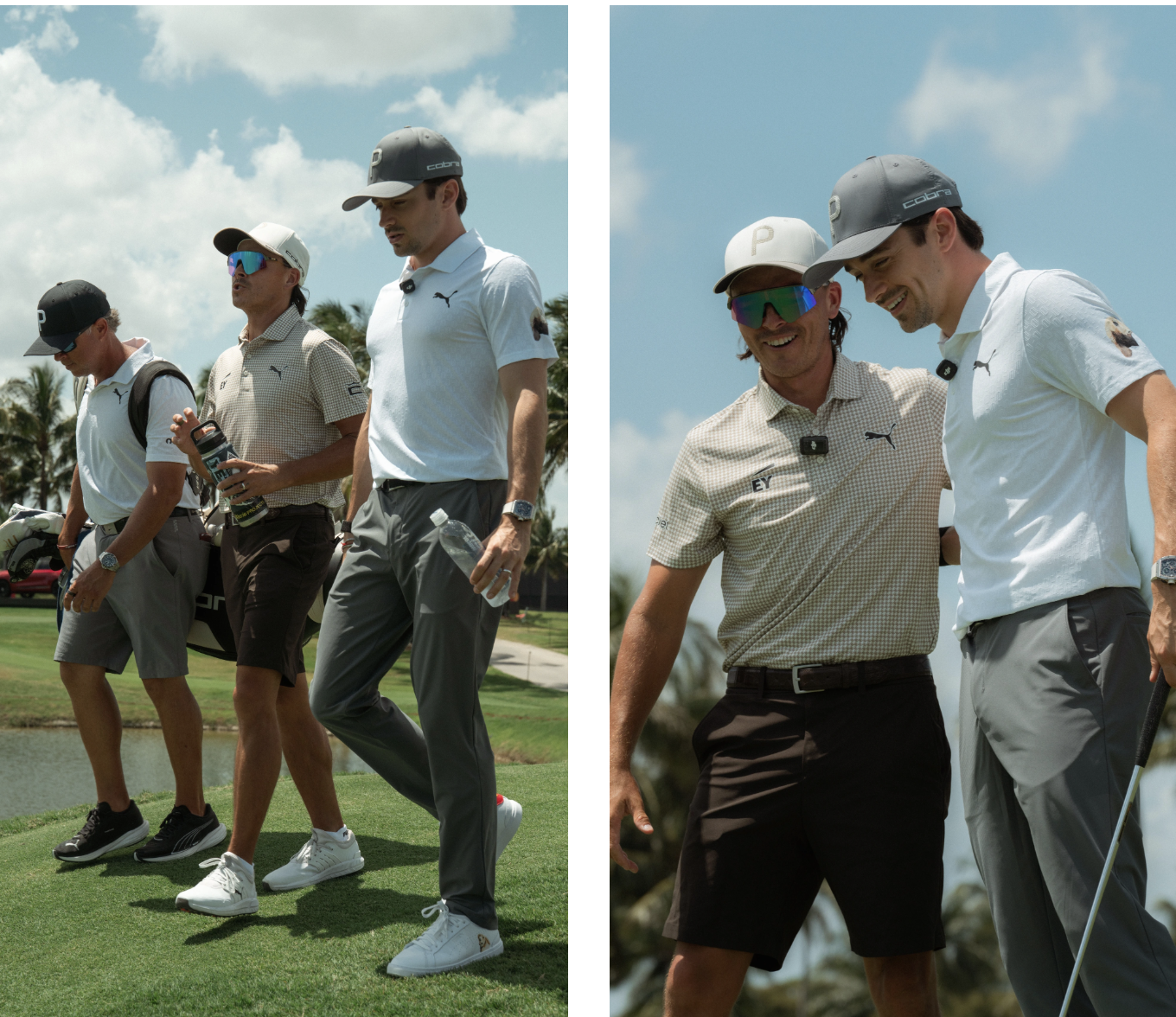
For brands with a broader sponsorship portfolio, F1 rights don't need to exist in isolation. Other sports, athletes and partnerships can provide access to people, expertise and communities that an F1 team wouldn't normally have, creating crossovers that make both properties more interesting.
A golf partnership might give a brand access to professional golfers and courses. A music partnership might bring artists and live events. A local sports sponsorship might provide an established fanbase in the city where the Grand Prix is taking place.
Rather than creating another F1 activation from scratch, it's worth asking what the brand already has access to elsewhere and what happens when those worlds are brought together.
PUMA has done this by bringing Charles Leclerc together with its golf portfolio in Miami, including putting Leclerc through a fitting inside the COBRA Golf Tour Truck before taking him onto the course.
The execution changes, but the broader strategic territory remains consistent.
For brands with substantial sponsorship portfolios, there can be more creative potential in connecting those assets than treating every partnership as a separate marketing programme.
Don't bolt culture onto the side
There is an obvious watch-out to all of this.
Working with an artist, chef, musician or creator doesn't automatically make a company culturally relevant. Neither does booking the fashionable venue in a race city.
There still needs to be a credible reason for the brand, the collaborator and Formula 1 to exist in the same experience.
A science-led organisation might credibly explore experimentation or discovery. A technology company might enable creativity, connectivity or participation. A financial services business might have a legitimate platform around access or opportunity.
The creative idea can move a long way from the literal product, but there still needs to be a thread connecting it back to the company. Without that, you've just created a cool event with a sponsor logo attached.
This is where the brand platform becomes useful. It provides the filter for deciding which cultural connections make sense and which are simply opportunistic.
Global platform, local execution
The other mistake is assuming a global F1 partnership requires identical activation in every market. The brand platform can remain consistent while its cultural expression changes from race to race.
Miami, Melbourne and Singapore have completely different creative communities, food, music, neighbourhoods and audiences. Those differences are an asset.
This matters particularly for off-track activations.
At the circuit, Formula 1 has already done much of the work for you. People have chosen to attend an F1 event. They're surrounded by the cars, teams, branding and atmosphere of the sport.
Away from the circuit, you're competing with the city.
During Grand Prix week that means restaurants, exhibitions, parties, concerts, pop-ups and dozens of other brand events. A show car in a branded space isn't necessarily enough to make someone choose yours.
The question becomes less how do we replicate this activation in every market? and more how does the same partnership idea become relevant here?
The brand doesn't have to be the attraction
This is perhaps the biggest shift in thinking. Brands naturally want visibility from sponsorship. But more branding doesn't automatically create more relevance.
For companies without an established consumer relationship, it can be more useful to reverse the order: start with something the audience already cares about, use the F1 partnership to give them access to something they couldn't normally experience, and create a genuine role for the brand in making it happen.
The company doesn't necessarily need to be the reason somebody walks through the door. But there should be a clear reason why that company was able to create what they find on the other side.
That role might be enabling access, bringing two worlds together, providing the technology behind an experience or creating an opportunity that wouldn't otherwise exist.
The brand is still central to the experience. It just doesn't need to be the entertainment.
Let F1 be the catalyst
Not every Formula 1 activation needs to look like Formula 1.
A Grand Prix creates a much bigger cultural moment around a city. Fans, media, creators, athletes, celebrities and brands arrive at the same time. Restaurants, hotels, galleries and neighbourhoods become part of race week alongside the circuit.
Partners can use that energy without trying to recreate an F1 garage everywhere they go.
In fact, the F1 elements can become more powerful when they're used selectively. A driver appearance, piece of team access or engineering expertise can feel far more valuable when it's placed somewhere unexpected rather than surrounded by another collection of familiar F1 tropes.
For brands whose products aren't naturally experiential, that's the opportunity.
Don't force the product to become entertainment. Work out what the brand can credibly stand for, identify what the partnership uniquely gives you access to, connect it with something the audience already values and make it relevant to the city you're in.
Brand platform + F1 access + cultural capital + local relevance.
The brands with the least obvious starting point sometimes have the most freedom to create something interesting.
If you're trying to turn an F1 partnership into an experience people genuinely want to be part of, Outlap works with brands and agencies on partnership strategy, activation and experiential. Get in touch.