
Inside F1: How to Get a Job as an F1 Team Content Creator
An F1 Team Content Creator is one of the most sought-after jobs in Formula 1, and it isn't difficult to understand why. You get to travel to races around the world, work inside the paddock and garage, get incredibly close to the cars and drivers, and capture moments that millions of fans experience through a screen.
As F1 teams are global sports, entertainment and lifestyle brands, a race weekend produces a huge volume of photography, video, social content, partner assets and longer-form storytelling across multiple platforms.
At the same time, the barrier to becoming a ‘content creator’ has never been lower. Almost everyone has a very capable camera in their pocket, and plenty of people can shoot a good-looking Reel or take an impressive photograph.
That doesn't necessarily mean they can create content for an F1 team.
The difference is being able to consistently produce the right content, to brief, in the team's style, at the quality expected of a global sports brand, while working at the pace and within the restrictions of a live Formula 1 environment.
Having worked inside an F1 digital team, and now briefing and working with creators across motorsport, here's what teams are actually looking for in an F1 content creator or videographer.
A quick clarification on what I mean by ‘content creator’ here: I'm not talking about influencers or creators being brought in to post to their own channels. I'm talking about the people behind the camera, creating content from withinside an F1 Team.
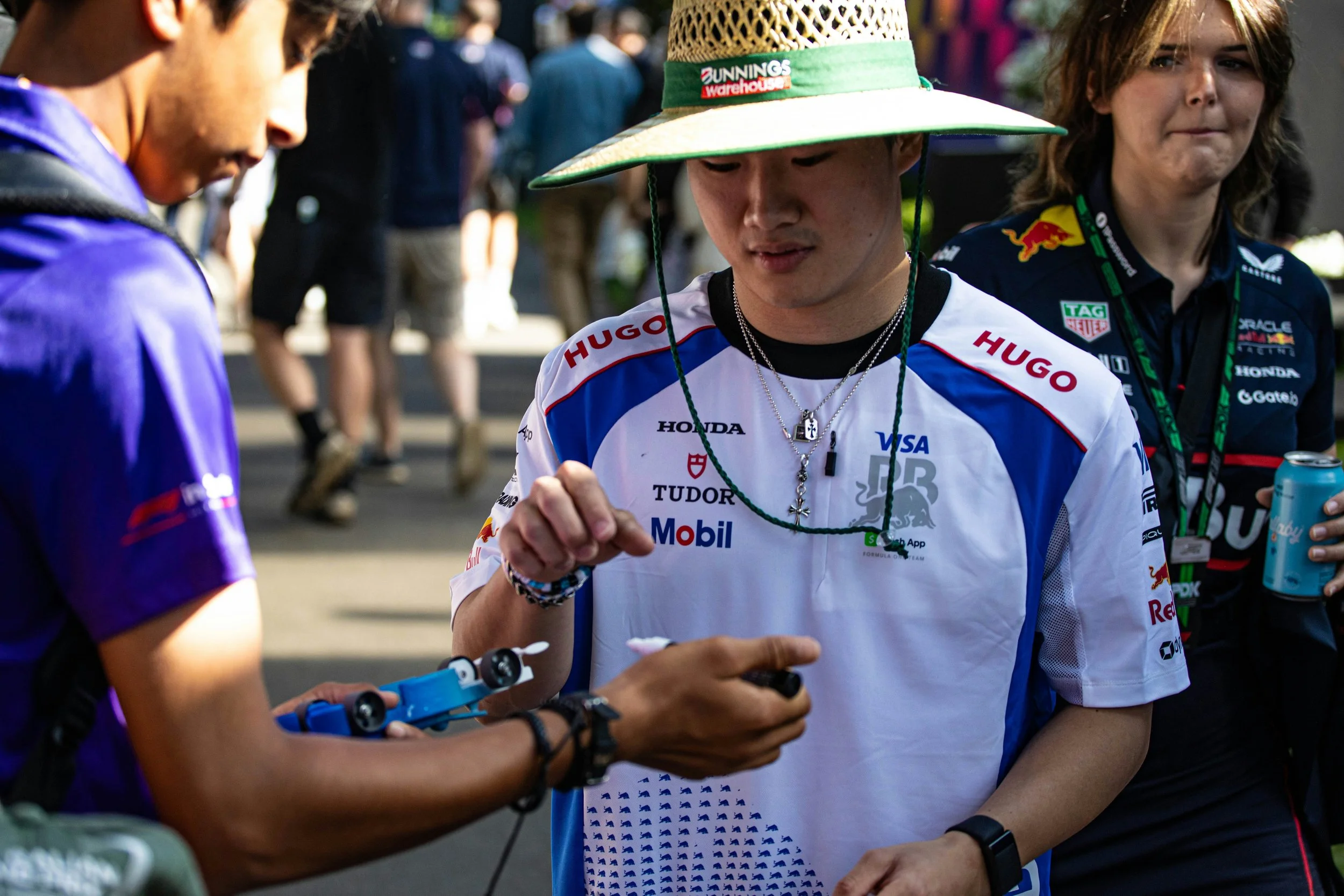
1.Capture the brief… then look beyond it
First, get what we actually need
Race weekend content capture is planned in advance, and content teams will have a brief for the moments they need before arriving at the circuit.
That could include driver arrivals, garage footage, post-session walk and talks, fan interactions, partner commitments, licensing, interviews, digital time or specific social- first formats. Some are editorial priorities; others might be contractual partner deliverables that simply have to come back from the weekend.
Being creative doesn't replace being reliable. If you've been briefed to capture a particular shot, person or piece of branding, coming back with 20 beautiful images of something else isn't particularly useful.
You need to understand what is essential, what is optional and what the content will ultimately be used for.
But don't stop looking when you've completed the shot list
Some of the best F1 content will never appear in a pre-planned brief.
A race weekend is full of small, unpredictable moments: a reaction in the garage, an interaction between drivers, a fan encounter, something funny in the paddock or a celebration that suddenly unfolds in front of you.
Part of the skill is having enough awareness of what's happening around you to recognise those moments and capture them without being told. They can often end up being some of the best-performing content from a weekend.
2.It’s a sports event, not on a film set
Access comes with restrictions
During live sessions, the garage is a working performance environment. There are operational areas and lines you don't cross. Mechanics, engineers, drivers and equipment need to move quickly, and nobody is delaying what they're doing because somebody wants a better angle for Instagram, and definitely do not step over the garage line when the race is in session.
The sporting operation always comes first. You learn where you can position yourself, when you need to move and when you need to get completely out of the way (or be barrelled over by a stack of tyres).
Knowing the rhythm of a race weekend helps
Once you understand how a weekend works and the schedule, you start anticipating rather than simply reacting. You know where a driver is likely to go after qualifying, when they come out of engineering, when the garage is about to become busy, when there might be a reaction worth capturing and when it's time to stop shooting and move.
There are also restrictions around what can be filmed and published, including sporting, commercial and broadcast considerations.
A good creator doesn't need someone constantly managing them around those constraints. They learn how to get the best possible content within the environment they're operating in.
You're part of a much bigger content operation
An F1 content creator is rarely working independently. Depending on the team, you'll be working alongside social media managers, producers, editors, photographers, communications teams, partnership teams and, of course, drivers and their management.
That means understanding where your role fits within the wider operation. You might capture something and hand the footage straight to an editor while you move on to the next moment. A social media manager might need a clip immediately to react to something happening online. The partnerships team might flag an asset that needs capturing for a sponsor, while communications may tell you that something can't be published yet.
Being able to communicate clearly and work as part of that wider team within constraintsis just as important as what you can do with a camera.
Read more about how F1 Social and Digital Teams actually work.
3.Speed is part of the skill
Race-weekend content has a short shelf life
The pace is one of the biggest differences between race-weekend content and traditional production.
You may be capturing, offloading, selecting and editing content while the next part of the weekend is already happening. Something captured immediately after qualifying might need to be live while qualifying is still the conversation, not six hours later when everyone's attention has moved on.
That changes what being a good creator means.
I'm interested in someone's final portfolio, but I'm also interested in how they got there. Can they capture quickly? Can they organise and transfer footage efficiently? Can they edit on-site? Can they maintain quality when they're tired and working in a fast-moving environment?
Sometimes you only get one shot
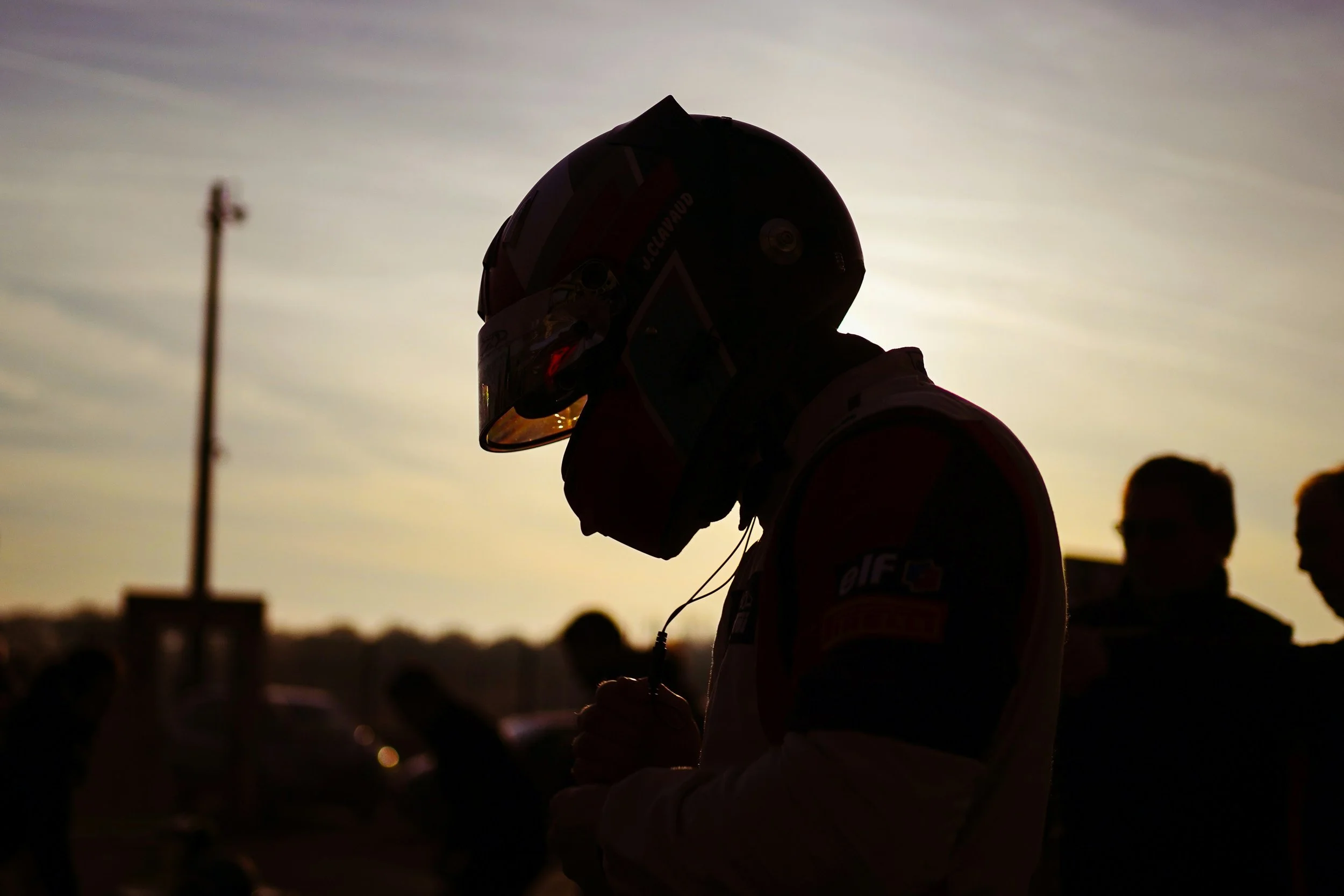
A driver putting on their helmet and suiting up in the garage before a race happens once. A spontaneous celebration happens once. A driver arriving at the track and swiping their paddock pass happens once before you have to move somewhere else.
There isn't always an opportunity to ask for another take.
Being able to get the shot first time, particularly when the shot is a required deliverable rather than something nice to have, is genuinely important.
4.Technical ability is expected. Creative thinking makes you stand out.
Some of the strongest motorsport content comes from creators experimenting with how the sport is captured: different lenses, motion blur, unusual framing, POV, film photography, analog formats, interesting transitions or unexpected camera positions.
That doesn't mean making everything experimental for the sake of it. You still need the clean garage shot. You still need the driver portrait. You still need the partner asset.
But once those are covered, what else can you see?
The challenge is finding a different way to capture a sport being photographed by hundreds of people standing in roughly the same places every weekend.
Bring ideas with you
The strongest creators I've worked with don't simply wait for someone to hand them a shot list. They bring references. They suggest formats. They notice things other teams, sports or creators are doing. They think about how something could be adapted rather than copied.
And they can pitch those ideas. If you want a Head of Content to give you access, resources or precious driver time to try something that wasn't already planned, you need to explain why it's worth doing.
What's the format? Why does it work for this team? Why does it work for this driver? Why would fans care? Where will it live? What do you actually need to make it happen, and is the payoff worth it?
Creative confidence is valuable. So is being realistic about what can actually be delivered.
5.Be social-first, not just a good videographer
Someone can be an exceptional filmmaker and still not necessarily be the right person for an F1 social content team.
A social-first creator is thinking about where the content will live before they press record.
Instagram, TikTok and YouTube aren't simply three places to upload the same edit. The way something is framed, paced and introduced can change depending on the platform, as can the length, audio, captions and storytelling style.
That means thinking about the final output while you're shooting it.
Do we have an opening shot that actually works as a hook? Do we have enough variety to build the edit? Is there a longer story here for YouTube as well as the 20-second social version?
Those decisions are much easier to make while you're capturing than when somebody discovers the gaps in the edit suite afterwards.
Know what's happening on social, and when the moment has passed
Content creators can also be some of the best sources of ideas within a team because they're often closest to emerging social formats.
TikTok trends, memes, audio, creator formats, photography styles, fashion, music and what's happening across other sports can all become inspiration.
But knowing about trends isn't enough.
You need the judgement to understand whether something actually works for the team and its drivers. Can we adapt it naturally? Will fans understand it? Does it suit the driver's personality? Can we execute it properly?
And, importantly, are we already too late? There isn't much value in discovering a social trend three weeks after everyone else has moved on.

6.Working with drivers
A race weekend includes engineering meetings, media sessions, partner appearances, fan engagements, filming commitments and countless other demands before you even consider what is happening on track.
Content teams are often working within very limited windows, and those windows can get even smaller when the schedule changes.
You might have planned twenty minutes and suddenly have five. You need to be able to adapt a brief quickly based on changing schedules and timing.
Know when to push, and when to back off
Working with athletes also requires emotional intelligence. Sometimes you need to be confident enough to ask for another take because you know the first isn’t usable. Other times, a driver has just had a difficult session, has already been pulled through multiple media commitments, is tired or jet-lagged and simply doesn’t want another camera in their face.
Even if something has been planned, there are moments when it’s better to back off than push for a piece of content when the payoff simply isn’t worth it. Knowing the difference, and being able to make that call quickly, is an important part of working in live sport.
You might also be capturing a driver walking through a crowded paddock while fans are barging in for an autograph, or attempting a quick piece to camera between commitments. Perfect conditions aren't guaranteed.
7.Expect to work on partner content
Partners have contractual rights and deliverables, and team creators can be involved in fulfilling them.
You might be capturing a particular campaign at the circuit, filming a driver at a partner appearance, covering an activation or shooting assets because an external brand or agency doesn't have the same access as the team.
Sometimes you'll be working from the team's own brief. Sometimes you'll need to understand requirements coming from a partner or their agency.
Either way, you need to know exactly what has to come back.
Read tips about F1 Partner Activation
Understand what is contractual
If a brand requires a certain product, logo, driver or moment to appear, that isn't an optional creative suggestion.
There may be vertical and horizontal outputs, photography alongside video, different versions for different platforms or markets, and specific requirements around talent and branding. Missing one required shot can mean a contractual deliverable hasn't been fulfilled.
Read more about F1 Filming days and content capture for F1 Team Partners.
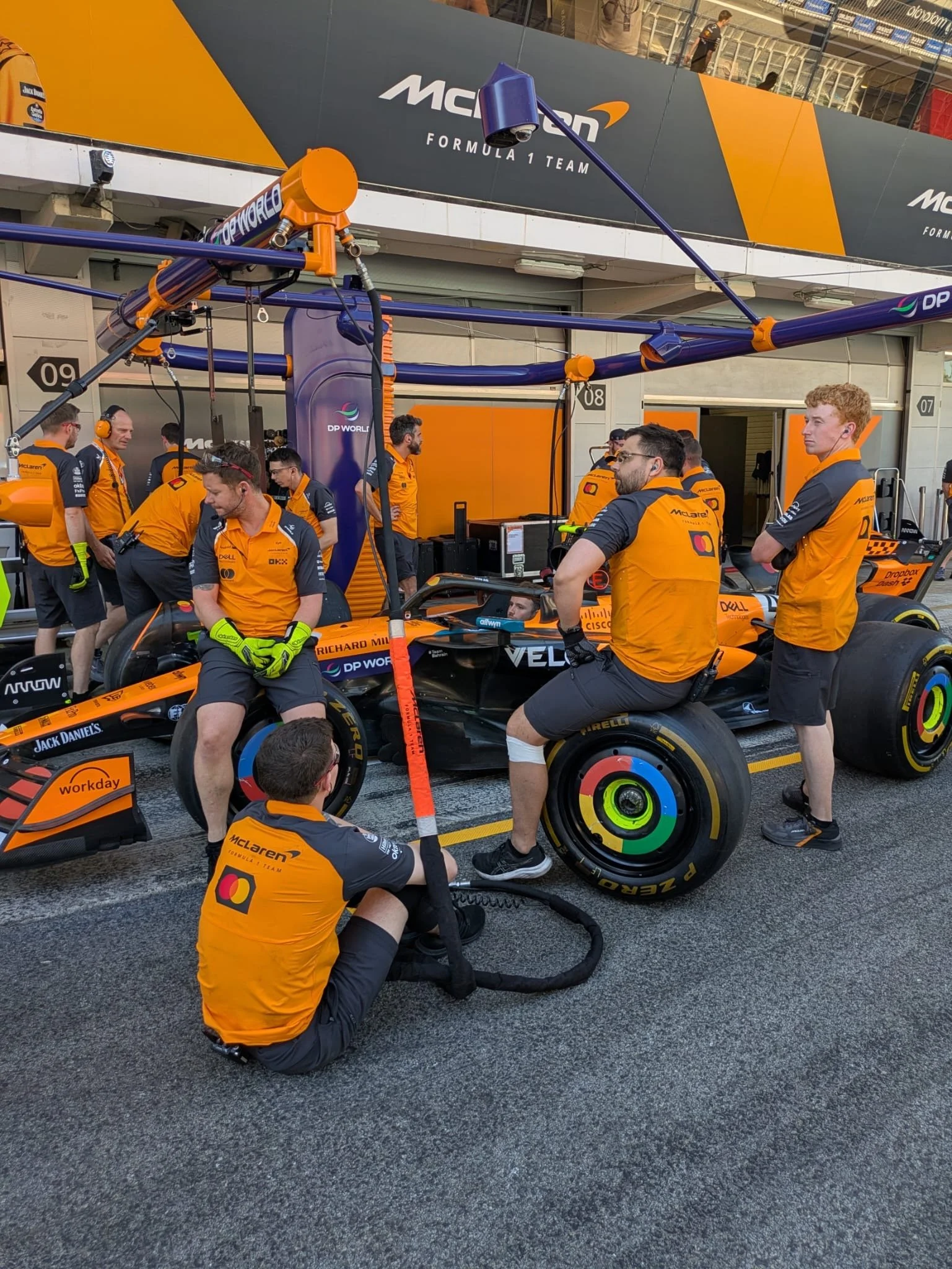
8.Video is important. So is photography.
Increasingly, versatility matters. You might be booked primarily as an F1 videographer but find that the team also needs a set of stills. Or you might be shooting photography and suddenly need to capture something usable for a Reel.
Being able to move between the two makes you considerably more useful, particularly at smaller events or shoots where there isn't a huge content crew.
The same applies to editing. You may need to create a quick vertical cut for social, provide footage for somebody else's edit and capture material that eventually becomes part of a longer YouTube story.
The broader your creative toolkit, the more situations you can handle.
The travel isn't always as glamorous as it looks
Travelling around the world with Formula 1 is obviously one of the attractions of an F1 content creator job, and it can be an incredible part of it. But it's worth being realistic about what that travel actually looks like.
Race weekends are long. You’re probably flying economy. Team pay isn’t great - and often you only get one lieu back after working the weekend. You can be at the circuit early and leave late, spend much of the day on your feet carrying equipment, and then still have footage to offload, organise or edit at the end of it. Add flights, time zones and back-to-back races and it can be physically demanding.
You're also there to work, not experience the Grand Prix as a fan. You might be standing metres away from the start of a race and barely see it because you're already thinking about where you need to be to capture what happens next.
For the right person, that's part of what makes the job exciting. But if what appeals to you is mainly travelling the world and watching F1 from the paddock, the reality of working as an F1 team content creator in Formula 1 may be quite different.
9.How do you actually get a job as an F1 content creator?
The reality is that there aren't that many F1 content creator jobs available directly within the teams. There are only 11 teams, and even the biggest don't have unlimited numbers of photographers and videographers travelling to every race, you'd probably be surprised by how small some content teams actually are.
Part of that is budget, but part of it is practical. Paddock and garage access is limited, passes are valuable, and there are only so many people you can have working around the team at a race weekend. Teams will have permanent content staff, but they'll also use freelancers, production companies and agencies depending on the shoot and location.
If your goal is to work in F1, don't make the mistake of only searching for F1 content creator jobs or F1 videographer jobs with a team logo at the top of the listing.
Look at motorsport agencies, sports marketing agencies, production companies, experiential agencies and the agencies working for F1 sponsors. Brands are activating throughout the season and need people to capture everything from paddock experiences and hospitality to fan activations, social content and driver appearances, as well as media days.
Working for one of the teams is only one route into creating content in Formula 1.
Build your portfolio in live sport
When applying for F1 content creator jobs, your portfolio needs to demonstrate more than technical ability. You also don't need to wait until somebody gives you an F1 paddock pass to start building a relevant portfolio.
Shoot other motorsport. Shoot football. Shoot athletics. Shoot live events. Find environments where things happen once, access is limited and you have to react quickly rather than control everything around you.
F1 content teams look beyond motorsport for creative inspiration and talent. Football in particular is a useful space to watch because clubs, leagues and sports publishers have developed sophisticated social content operations and are constantly experimenting with how athletes, fans and live moments are captured.
The important thing is demonstrating that you understand live sport and social storytelling, rather than filling a portfolio with pictures of F1 cars you happened to take from the grandstand.
Can you tell the story around the sport? Can you capture athletes as personalities? Can you spot fan moments? Can you turn around an edit while the event is still relevant? Can you produce something that feels native to social rather than like a traditional event highlights film?
That's much closer to the skill set an F1 team is looking for.
Coming from film? Be prepared to change your style
A traditional film or production background can give you brilliant technical foundations, but moving into social and live sport often requires a change of mindset.
In traditional production, you might spend considerable time setting up the perfect frame, lighting a scene or repeating a shot until it's exactly right. At a Grand Prix, the perfect version may simply not be available.
Sometimes the driver is walking past you once. Sometimes you have three minutes instead of the ten you were promised. Sometimes something far more interesting is happening behind you while you're trying to perfect the shot in front of you.
You need to know when technical perfection matters and when speed, instinct and getting the moment matter more.
The same applies in the edit. Race-weekend social content often needs to feel immediate. A strong edit published while everyone is talking about what just happened can be considerably more valuable than a perfect edit delivered the following day.
That doesn't mean lowering the quality bar. It means learning to produce quality at speed.
Make your portfolio show how you think
A portfolio shouldn't only prove that you own good equipment and know how to use it. The people reviewing it should be able to see how you think as a creator.
As an F1 videographer or content creator, you need to show range: photography and video, fast-paced social edits and more considered storytelling, athletes and fans, planned shoots and reactive live moments. If you've experimented with film, unusual lenses, POV or another creative format, include it where it strengthens the work.
And think about what you're showing first. If you're applying for a social content role, a beautiful three-minute cinematic showreel isn't necessarily enough. I want to see whether you understand the type of content we're actually producing every weekend.
Get experience working in fast-moving live environments, build a portfolio that demonstrates social thinking as well as technical ability, and become someone who can be trusted to deliver when there isn't a second take.
Once you can demonstrate that, the jump into Formula 1 becomes much smaller.
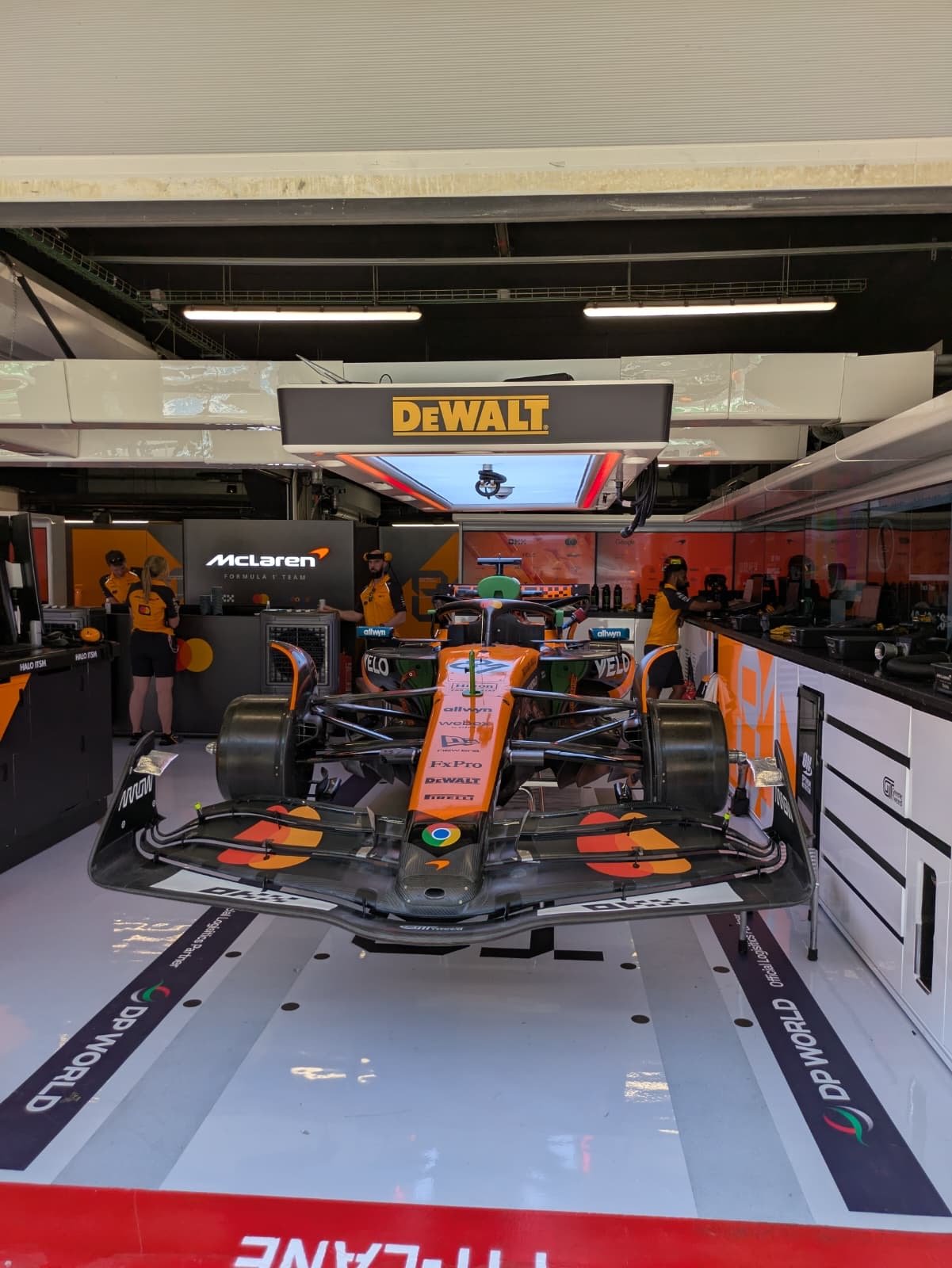
10.What makes an F1 content creator stand out?
For me, the strongest F1 content creators sit somewhere between photographer, videographer, editor, social creative and storyteller.
They can execute somebody else's idea brilliantly, but they also have enough curiosity and confidence to bring their own. They understand the difference between capturing a beautiful image and capturing a well-performing one. They know when they have time to experiment and when they have one chance to get the required shot.
They understand platforms and trends without chasing every piece of internet culture that appears on their feed. They understand storytelling too: what will hook a fan, what will entertain them, and what they actually want to see from a team or driver rather than simply what the brand wants to say.
Being fan-first means thinking about why someone would stop scrolling, watch, share or care in the first place. At the same time, they can work with drivers, partners, communications teams and the sporting operation without making anybody else’s job harder.
And they can do all of that quickly. Because in F1, being able to create great content is only half the job. The other half is knowing how to create it within the reality of the sport.
Looking for support with F1 content?
At Outlap, we work with brands, teams, rights holders and agencies across motorsport, helping turn partnership and campaign ideas into content that works for the sport, the platform and, most importantly, the fans.
If you’re looking for support with F1 content strategy, creative development or finding the right people to bring an idea to life, get in touch.