
How Formula 1 Liveries Are Created: Design, Sponsors and Strategy Explained
When a special livery appears in Formula 1, what you see is the finished result: the car on track, the reveal , the final design on track.
What you don’t see is everything that goes into getting it there. Most of these liveries are planned months in advance, worked through across multiple teams, and built as part of a wider campaign rather than just a design change.
Engineering constraints, regulatory requirements and commercial agreements all shape what is ultimately possible. At the same time, the Formula 1 car livery design becomes the focal point for wider activity across digital, PR, events, content production and, increasingly, licensing and product.
For brands and partners, it is one of the most visible assets within a Formula 1 programme.
This guide breaks down what goes into a Formula 1 livery, from the realities of designing for a race car to the commercial and marketing systems that sit behind it.
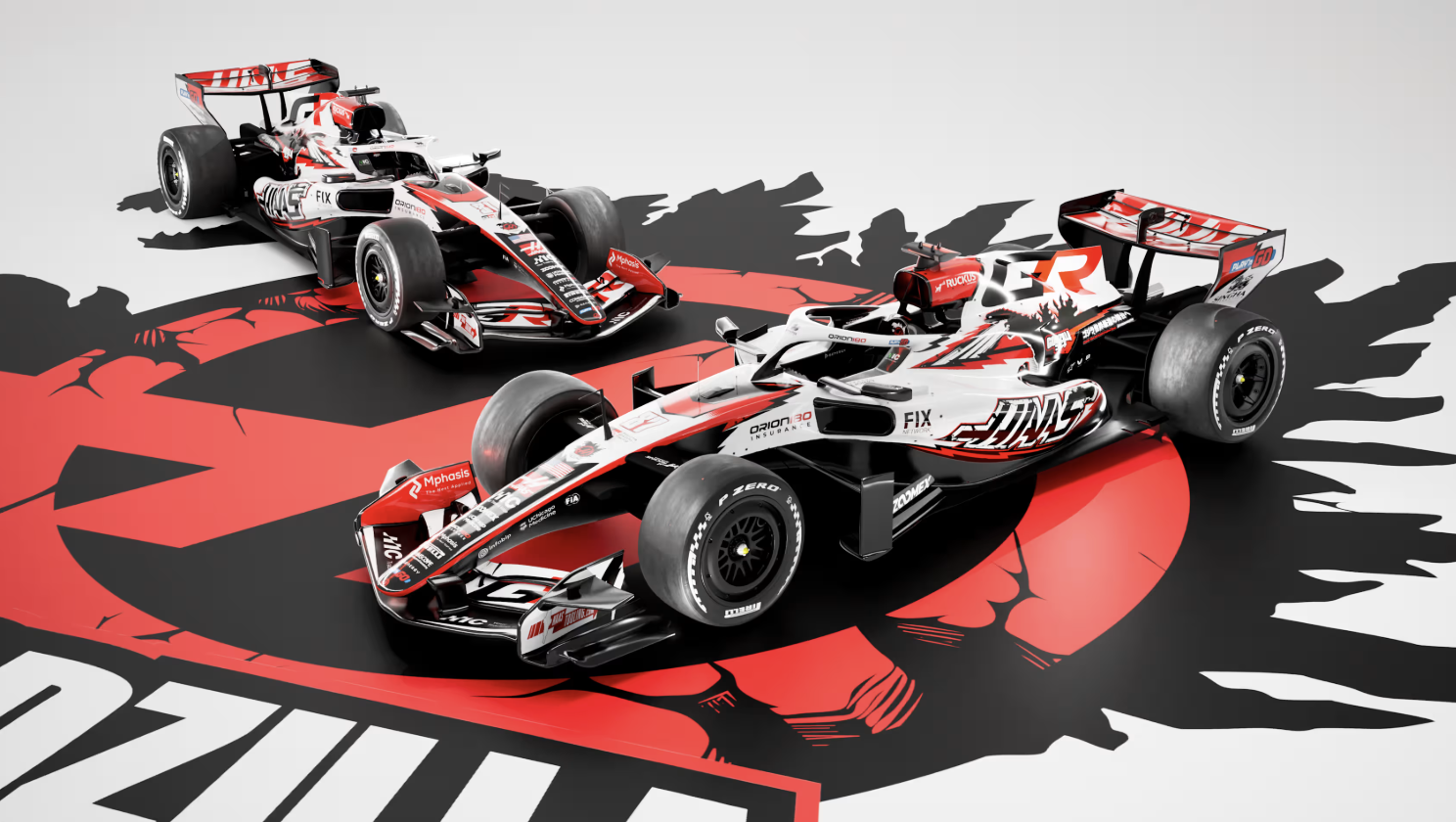
HAAS F1 Team Japan livery inspired by the Godzilla marking the launch of its new partnership with Toho Co., Ltd.
The design reality: it still has to work as a Formula 1 car
Before any creative idea for a livery is approved, it has to work on a Formula 1 car. That immediately places constraints on what is possible.
Unlike other areas of marketing or design, an F1 livery design cannot be developed in isolation. Every decision needs to account for performance, materials and how the car operates under race conditions.
Weight is a key factor. Paint adds mass, which can impact performance, so teams are constantly balancing design with efficiency. In some cases, this has directly affected what can be run on track. Red Bull Racing, for example, had to abandon a fan-designed livery concept in 2024 because the additional paint weight would have compromised performance.
Beyond performance, there are also design constraints at a team level. Even for partner-led liveries, the car still needs to align with the team’s broader identity, colour palette and visual system.
Regulation adds another layer. All liveries must be approved by the FIA, with strict rules around elements and overall compliance. Designs need to be developed well in advance to allow time for approval, iteration and production.
Taken together, these factors mean there are far more creative constraints than might be expected.
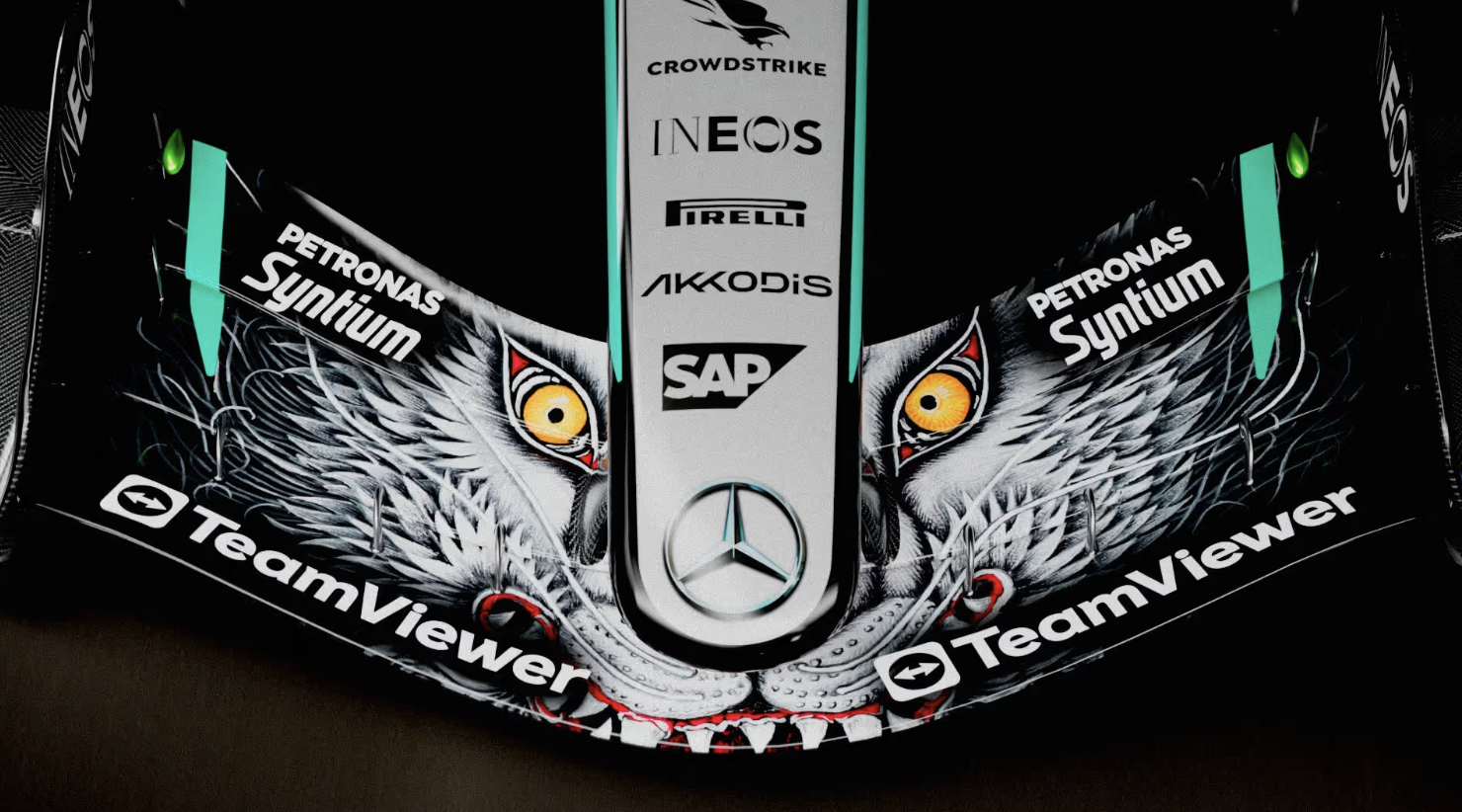
Mercedes F1 team front wing livery for Suzuka GP
The commercial reality: liveries are contractual
When a livery is linked to a partner, it sits at the intersection of creative execution and commercial agreement.
In most cases, the right to feature within a special livery is defined contractually, either as part of the original partnership or as an additional, negotiated uplift tied to specific races. The partner’s presence on the car, including the space they occupy and the level of visibility they receive, forms part of the overall value of that agreement.
Even within a partner-led livery, the car does not become a blank canvas. Existing sponsor commitments remain in place, and multiple brands still need to be represented. The final design is therefore the result of balancing a new creative direction with an established commercial structure.
There are cases where liveries are driven more by the team or brand itself, often linked to cultural moments or broader brand storytelling. However, these still operate within the same underlying framework of sponsor agreements and obligations.
It’s rare to see liveries that are complete takeovers. This is also why some special liveries can look less dramatic than fans expect. In reality, they are working within tight technical, regulatory and commercial constraints, not starting from a blank canvas.
How a Formula 1 livery design is developed
Once a livery opportunity is defined commercially, the creative process begins.
In a partner-led scenario, ideas can come from the brand, the agency, or collaboratively with the team. Concepts are then refined into a smaller number of directions that align with both the campaign and the realities of the car.
At this stage, the focus is not just on how the livery looks, but what it represents. The strongest concepts are built around a clear creative rationale, something that connects to the brand, the moment and fans, rather than just a visual treatment.
This is a key part of how F1 liveries are made, combining creative thinking with technical and commercial constraints.
Designs are adapted to work with the car’s surfaces, sponsor placements and the team’s identity, while also being prepared for FIA approval well in advance of the race weekend.
The final livery is rarely the first idea. It is the version that works across performance, regulation and the wider campaign.
Consideration is given to how the livery will be used beyond the car. Concepts need to translate across digital content, photography, broadcast and, in many cases, physical environments or merchandise.
The result is a design that is not only visually distinctive, but also workable across the full campaign.
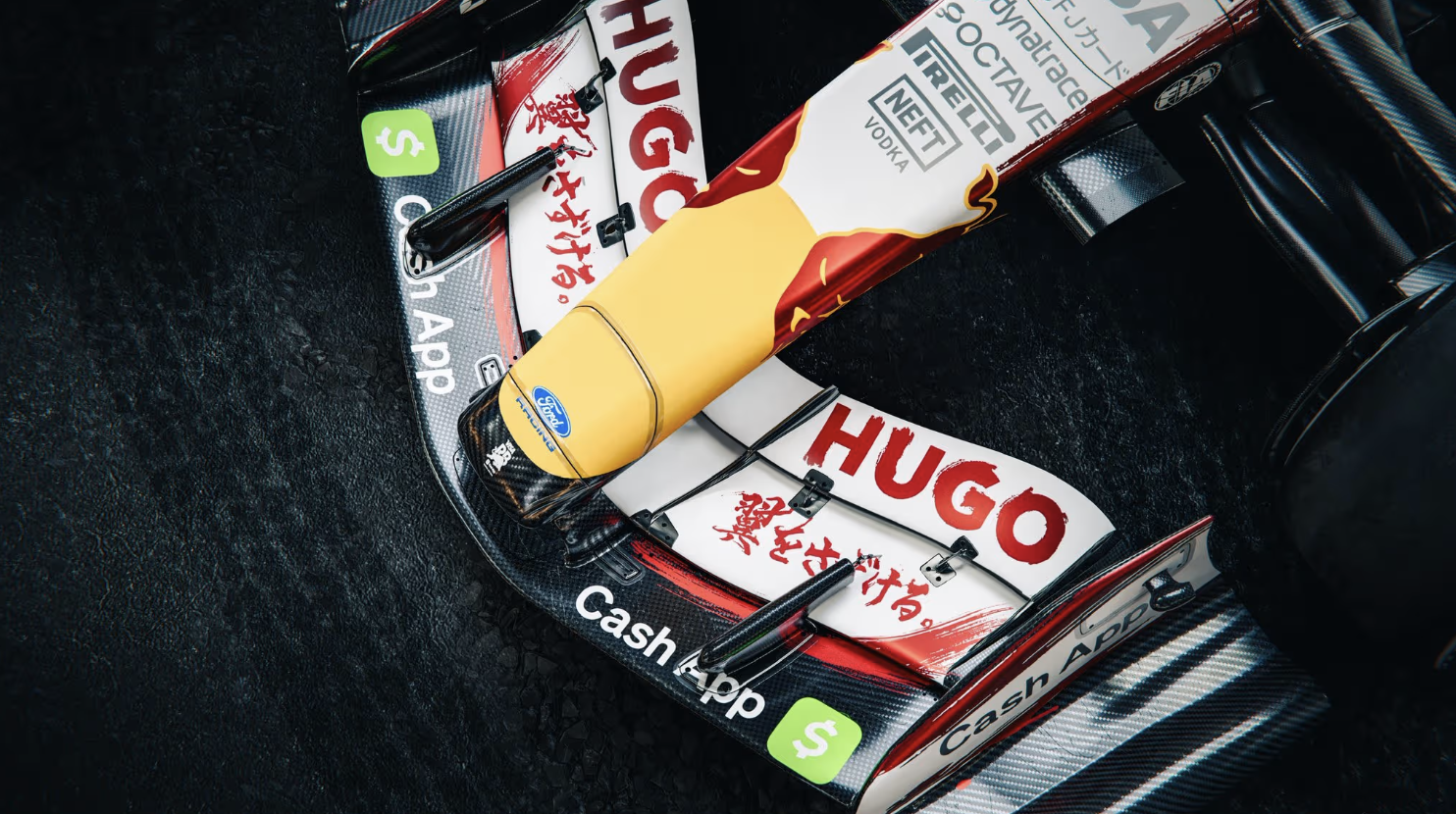
A livery is a campaign, not just a paint job
Once the design is finalised, the focus shifts from creation to activation.
A special Formula 1 livery is not treated as a standalone asset. It becomes the foundation for a broader campaign, designed to maximise visibility and impact across multiple channels.
This typically includes:
Creative direction and rationale
A clear create idea/ concept that underpins the livery, defining what it represents, how it connects to the brand or moment, and how it will resonate with fans.Translation across design and product
The livery needs to extend beyond the car, translating into race suits, team kit, helmets and licensed merchandise such as limited-edition apparel and collectibles.Digital campaign and content production
A full suite of assets is developed to support the launch and rollout, including teaser content, reveal films, social formats, photography and campaign visuals. These are used across both team channels, from social feeds to platform-specific assets.Campaign rollout and amplification
The livery is introduced through a coordinated rollout, supported by PR, media coverage and ongoing content throughout the race weekend to maintain visibility and engagement.Experiential and event activation
Depending on the campaign, this can include trackside moments, partner events or location-based activations designed to bring the livery to life beyond digital.
All of this is planned and executed across multiple teams, from partnership and brand to digital, PR, retail and production. The result is that the livery itself is not the end product. It is the centrepiece of a campaign designed to deliver value across awareness, engagement and commercial return.
Case study: Visa Cash App Racing Bulls Japan livery 2026
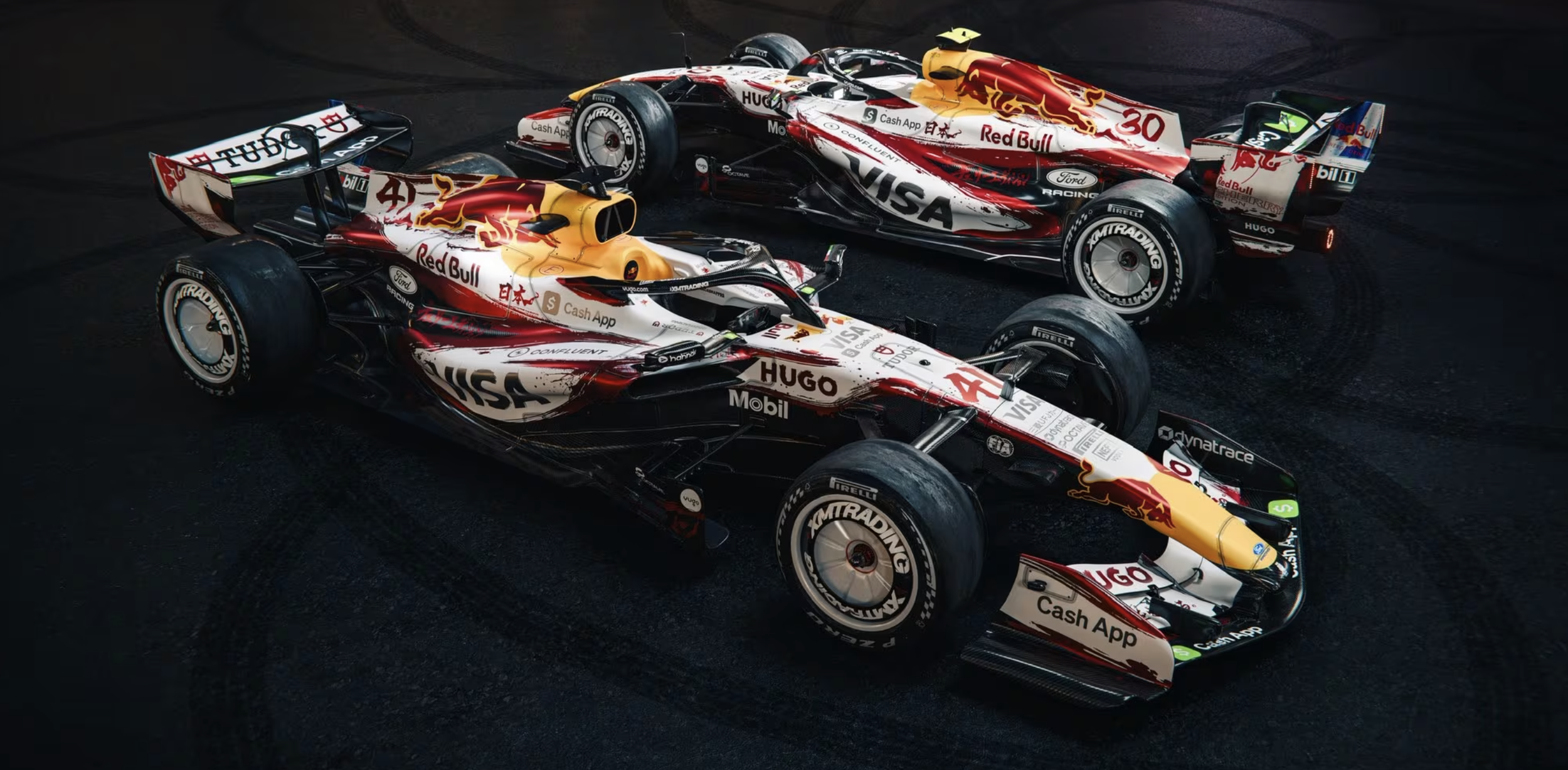
Racing Bulls Japan 2026 special Formula 1 livery
A good example of how a Formula 1 livery operates as a full campaign can be seen in Visa Cash App Red Bull Spring Edition livery for the Japanese GP.
Rather than being treated as a standalone design, it was built as part of a broader brand moment, executed across multiple touch points as a coordinated campaign.
Creative rationale
Built around the launch of Red Bull’s Spring Edition can, the livery drew on Japanese cherry blossom season, with spring linking product, place and timing. It also connected to the the Rebl Car Culture platform introduced in 2025, adapting a global brand direction to Tokyo’s car and drifting culture.Design translation
The identity combined cherry blossom tones with graphic elements inspired by car culture, developed with a Japanese artist . This visual language extended into team kit and race suits, creating consistency across all touch points.Digital content and rollout
The livery was supported by a full suite of digital assets, including reveal videos, event films and photography captured in Tokyo and on track. The identity had a full social takeover across race outputs such as result graphics, social assets and platform formats. The team also created a suite of 3D renders and digital content to showcase the livery.Licensing and physical integration
The design extended into limited-edition merchandise, including apparel, while also appearing across race suits, driver kit, garage branding, hospitality screens and partner environments. Product integration with the new Red Bull flavour featured throughout assets.Experiential activation
Unveiled at the Red Bull Tokyo Drift event, the livery was placed within a subculture aligned with both brand and audience. The car was then taken through Tokyo, including Meguro River and Tokyo Tower, with cherry blossom reinforcing the seasonal narrative. Trackside, garage and hospitality spaces reflected the same identity, with live calligraphy by Bisen Aoyagi who also styled the team’s garage at Suzuka.Cultural relevance and audience connection
The campaign tapped into Japanese cherry blossom season alongside local car and drift culture, reflecting a broader approach in Formula 1 to connect with younger audiences through subcultures.
Rather than just a new look on the car, it was a full campaign across product, content and activation. This is what separates a livery that simply appears on track from one that becomes a moment, driving value across content, engagement and commercial return. It also had deep cultural connection to Sakura (cherry blossoms), local artists and creatives, Tokyo drift culture, adding to relevance and wider culture.
What brands often underestimate
From the outside, a Formula 1 livery can look like a quick creative opportunity. In reality, it is one of the most complex activations within a Formula 1 partnership.
What is often underestimated is the level of coordination required to bring it to life. Planning needs to start well in advance (usually around 4 months before it hits the track) to align design, approvals, production and campaign and PR rollout, with multiple stakeholders involved across teams, partners and agencies.
Without the supporting content, activation and distribution, even the strongest design risks underdelivering.
A Formula 1 livery is not just a design exercise. It is shaped by engineering, defined by commercial agreements and brought to life through coordinated campaign execution.
The most effective liveries are not treated as one-off moments where the car hits the track. They are planned as part of a broader strategy and 360 campaign with clear objectives, strong creative direction and a defined role within the race season.
If you’re planning a Formula 1 partnership or activation and want to think beyond the surface, feel free to get in touch.